


By Zhao Yu
Recently, the Maritime Safety Administration of the Ministry of Transport launched a dedicated "Arctic Navigation" service column on its official website, drawing wide attention in the shipping industry.
The column provides one‑stop access to Arctic route application procedures, real‑time ice and meteorological information, international polar navigation rules, coastal state regulations, and emergency contact channels.
According to Yin Junjie, Deputy Director of the Ningbo Maritime Silk Road Research Institute at Zhejiang Wanli University, this move lowers industry entry barriers through inclusive public information services and signals the state's clear encouragement for diversified shipping entities to participate in Arctic operations, thereby strengthening the "Ice Silk Road" and safeguarding foreign trade supply chains.
8 regular Arctic Express flights, operated by a single shipping company
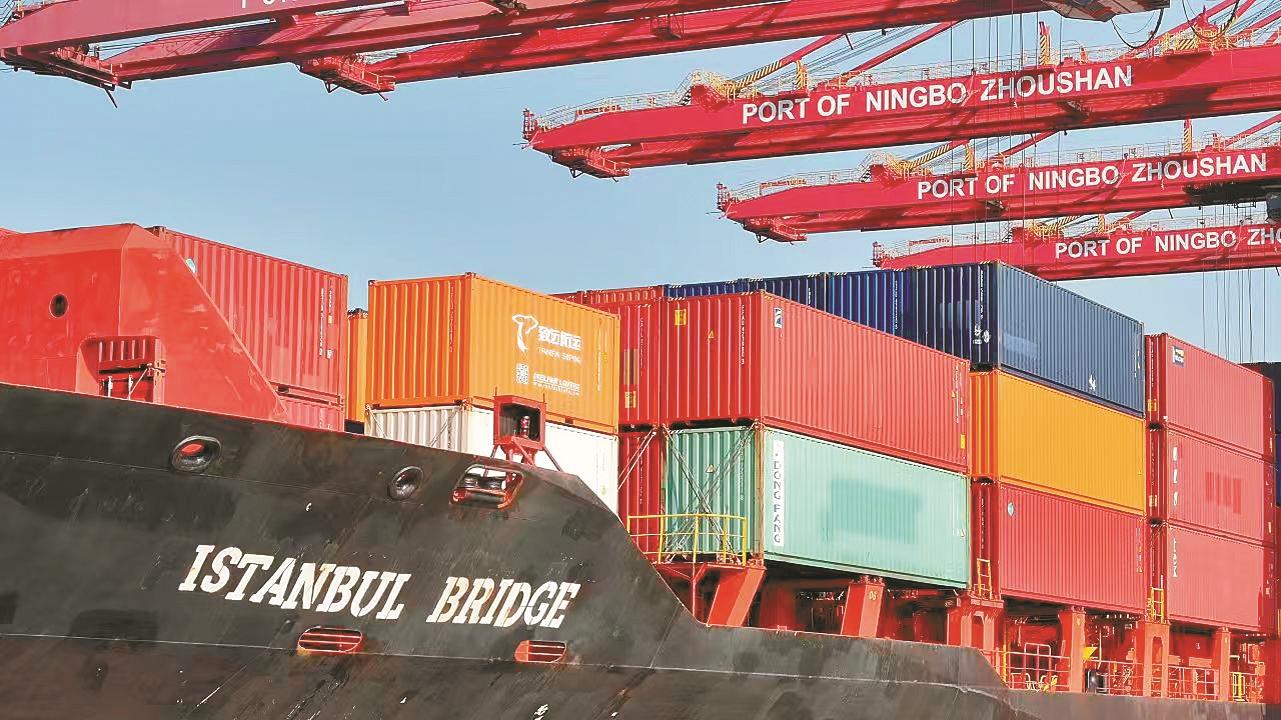
This summer, the "China‑Europe Arctic Express" will enter regular service. From August to October, it plans to operate on a weekly schedule, with a total of 8 fixed voyages, all departing from Ningbo Zhoushan Port as the final Chinese port of call, crossing the Arctic Circle directly to the UK's Port of Felixstowe and then connecting to other major European ports.
Despite the expanded schedule compared with last year, all sailings are still operated solely by Hai Jie Shipping.
Industry insiders point out that beyond high hardware investments, the continuous costs of research and fragmented information access have discouraged most potential entrants. Real‑time ice conditions, multi‑country regulations, and separate emergency liaison channels impose heavy burdens on companies without established Arctic experience.
Zhu Chuanshu, founder of Ningbo Jihang Shipping, which mainly runs container services on the Red Sea route, noted that the Arctic route is navigable for only two to three months each year, with floating ice changing constantly and policies frequently adjusted.
Both navigational and policy risks are hard to estimate, making companies hesitant to take the first step.
Cargo owners also remain cautious, as stable cargo volumes are essential for sustained investment; without them, shipping companies risk falling into a loss‑making cycle, which hinders market development, added Xu Xiaorong, overseas strategy expert at WIFFA.
Information disclosure is expected to help more shipping companies and shippers take the "first step"
The new column effectively addresses these gaps. It updates Arctic meteorological and ice data every three days, with ice forecast charts marking ice extent and thickness. It also compiles polar navigation rules, Russian Arctic administration regulations, and other relevant documents, and makes public the full application process and emergency hotlines of overseas Arctic command centers. Zhou Peitao, Deputy General Manager of Seacon Shipping (Ningbo) Co., Ltd., praised the four pillars – ice/weather information, rules and regulations, application channels, and emergency communication – as precisely matching the most urgent needs of Arctic operators, transforming previously "insider" knowledge into openly accessible public services.
Beyond promoting Arctic routes, the platform aims to diversify global logistics networks, reducing over‑reliance on traditional passages like the Red Sea and the Strait of Malacca, where geopolitical risks continue to rise. Although the Arctic route has a short navigable window, it offers fewer geopolitical disruptions and faster transit times, serving as a vital strategic backup corridor. The information platform paves the way for more shipping companies to explore northern routes and build a complementary network of "traditional maritime + Arctic Express + China‑Europe rail."
For shipping companies interested in Arctic operations, the column now provides a unified official information channel, enabling reliable risk assessment and better judgment of the navigable window. For forwarders and foreign trade cargo owners, it serves as a practical reference to independently evaluate transit times and potential risks, helping them compare Arctic versus conventional routes and arrange shipments more flexibly. Ningbo Mascube Import & Export noted that transparent data empowers foreign traders to better control delivery timeliness and safety.
Seizing policy dividends, how can Ningbo foster a diversified Arctic shipping ecosystem?
Seizing the policy opportunity, Ningbo should foster a diversified Arctic shipping ecosystem. Some local firms have already started preparations. In June this year, Seacon Shipping Group held an Arctic route safety training seminar in Qingdao, inviting the China Classification Society, insurers, meteorological navigation agencies, shipowners, and experienced captains and engineers to discuss polar navigation safety. Ningbo Blue Wisdom Marine Technology has launched systematic crew training programs to address the structural talent shortage faced by small and medium‑sized shipping companies.
Experts suggest a dual approach – boosting both supply and demand. On the demand side, Ningbo can host dedicated Arctic route promotion sessions for its advantageous export industries such as new energy and cross‑border e‑commerce, using official column data to calculate time‑cost‑risk tradeoffs for enterprises. It can also collaborate with forwarders to build a shared service platform, customize logistics solutions suited to Ningbo's cargo types, and consolidate cargo from the Yangtze River Delta hinterland to achieve economies of scale and lower transport costs, encouraging more foreign trade companies to try the route.
On the supply side, Ningbo should develop full‑chain integrated services. Leveraging its local manufacturing base, it can deploy polar vessel supplies and bonded anti‑ice material storage, and enhance the integrated "port + shipping + insurance + trade" service system.
Nevertheless, experts caution that the commercialization and marketization of the China‑Europe Arctic Express is a long‑term project that cannot be accomplished overnight.
Xu Xiaorong emphasized that sustained, patient efforts are required to engage more stakeholders in the "Ice Silk Road." Through early pilot projects and industrial reserve‑building, Ningbo can secure a leading position in the evolving global shipping landscape.