


By Jin Yuhan
As temperatures fall, Ningbo's two main outdoor ski resorts—Shanglianggang in Fenghua and Zhedong Diyijian in Ninghai—have opened for the winter season, drawing a steady flow of visitors. New snow-based activities introduced this year have added to the appeal.
Despite limited natural snowfall, winter tourism in Ningbo has gained momentum, supported by purpose-built facilities and expanding recreational options.
Making Snow Where Nature Falls Short
"The facilities are well run, and we come every winter so my child can try skiing," said Hao Jia, a local ski enthusiast, during the New Year holiday.
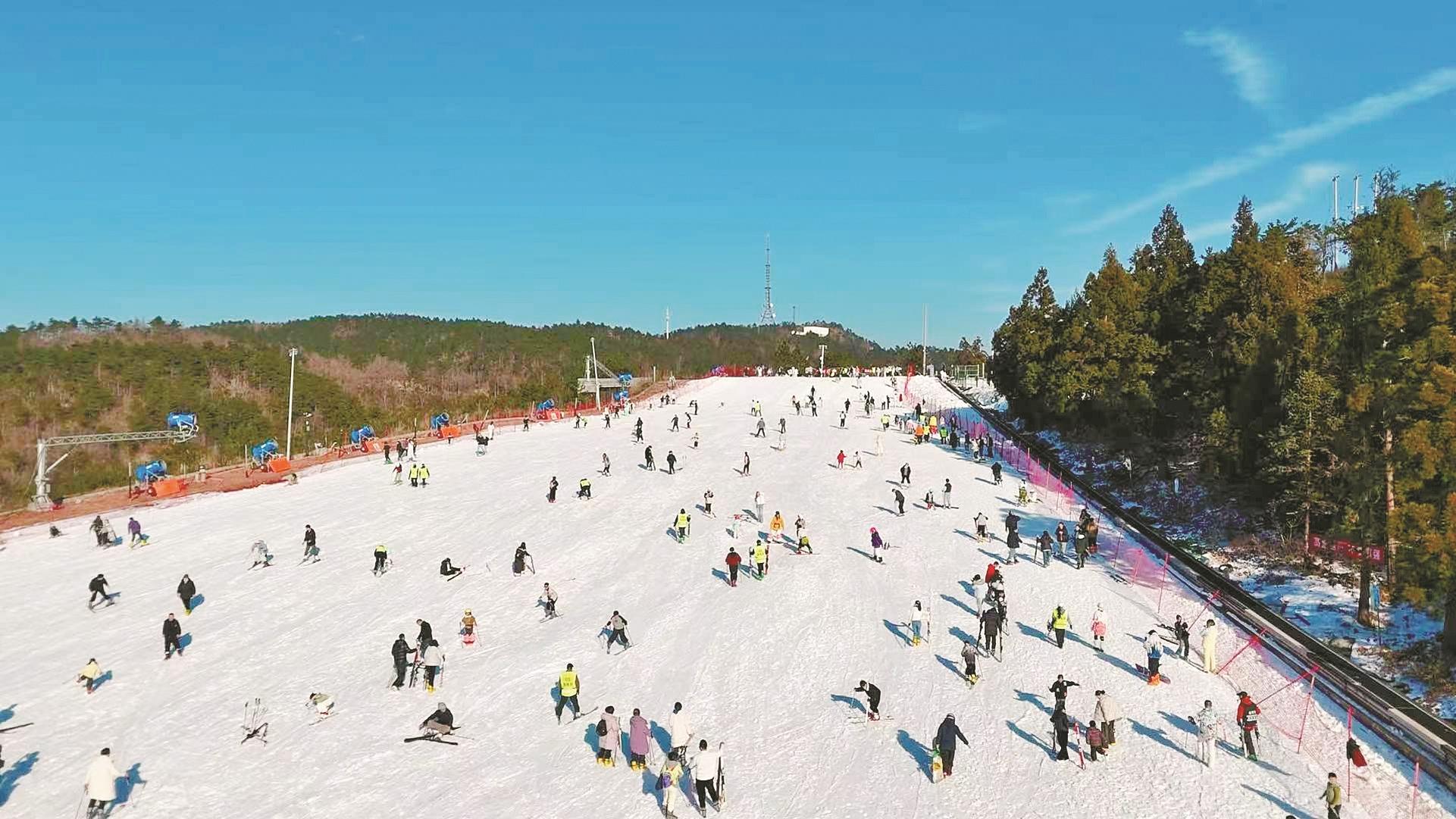
In a city that rarely sees natural snowfall, ski resorts hold strong appeal. Since reopening on December 28 last year, Shanglianggang Ski Resort has received more than 8,000 visitors, up from the same period last year.
Much of that growth stems from upgrades to the resort's snowmaking system, which is calibrated to work closely with local weather conditions to keep slopes consistently skiable.
Ningbo's first outdoor ski resort, Shanglianggang is located 1,080 meters above sea level in the Siming Mountains. It features a 200-meter beginner slope with a maximum gradient of 18 degrees and a vertical drop of 30 meters, covering nearly 20,000 square meters of snowfield.
"Snowmaking depends on temperature and humidity," said Hou Jiaqi, the resort's manager. "This winter has been 1 to 2 degrees Celsius warmer than last year, with more frequent fluctuations, so our team has to track conditions carefully and time snow production precisely."
A similar approach is used in Shenzhen Town, Ninghai County, where winter tourism also relies on higher elevations and artificial snow.
The Zhedong Diyijian Ski Resort, perched at 954 meters, operates two ski runs for different skill levels, along with a snow play area where visitors can enjoy sledding and other non-ski activities.
By combining favorable terrain with advanced snowmaking, Ningbo's resorts have turned limited natural snowfall into a workable—and increasingly popular—winter tourism draw.
Manufacturing the Gear Behind Ningbo's Ski Boom
An enjoyable skiing experience depends on reliable, high-quality equipment—and Ningbo has a robust local supply chain to meet growing demand. This has become a key pillar of the city's expanding winter sports economy.
Ninghai's Shenzhen Town is home to 34 sports pole manufacturers whose products account for 60% of the global market, generating nearly 1 billion yuan in annual output.
At Ninghai Xingda Leisure Products Co., Ltd., workers assemble ski poles with precision. "We began fulfilling domestic orders as early as last September," said sales manager Lin Yueyun. From September to December 2025, the company's domestic sales rose 30% year-on-year, while monthly production capacity grew by 20%.
Nearby, Ninghai County Trojan Outdoor Products Co., Ltd. assembles trekking poles as well as ski poles. "We've gradually shifted toward serving the domestic market, from Northeast China to nationwide," a company representative said. "Our annual output value now exceeds 20 million yuan."
In Beilun, Ningbo Maosen Sports Goods Co., Ltd. has specialized in ski supplies manufacturing for more than a decade. "While most of our products were previously exported to North America, Europe, Japan, and South Korea, domestic orders have steadily increased in recent years," said general manager Qiu Qianchen. With Chinese consumers seeking more diverse, high-quality winter tourism experiences, the market for local ski equipment is expected to continue growing.
Expanding Winter Fun Beyond Ski Resorts
"After skiing at Zhedong Diyijian in the morning, we soaked in the Ninghai Forest Hot Spring Resort in the afternoon, and spent the evening visiting the nearby village, savoring local delicacies," said Huang Jie, a tourist from Shanghai.
In Ningbo, winter tourism is moving beyond single attractions, as younger visitors gravitate toward combined experiences. Visitors are increasingly pairing skiing with hot springs, cultural activities, and photo sessions, turning their trips into full-day experiences.
"Transforming a single winter attraction into a multi-layered leisure experience is key to driving visitor numbers and spending," said Li Huamin, executive director of the Ningbo All-for-One Tourism Development Academy and a professor at Ningbo Institute of Technology, Zhejiang University. He noted, however, that compared with more established winter destinations elsewhere in the Yangtze River Delta, Ningbo still has room to improve.
At Shanglianggang, winter tourism is being shaped around local geography and ecology. "After skiing, visitors can walk forest trails and, if they're lucky, see rime ice dangling off the tree branches," said resort manager Hou Jiaqi. The resort plans to add new attractions such as snow-themed installations and cafés to increase its appeal.
Beyond ski resorts, winter-themed attractions are also spreading across the city. Scenic areas and shopping complexes put up winter-themed installations in winter, highlighting the cold season's charm.
"Ningbo should play to its local strengths and keep expanding winter tourism beyond skiing, with more distinctive products and experiences," Li said.