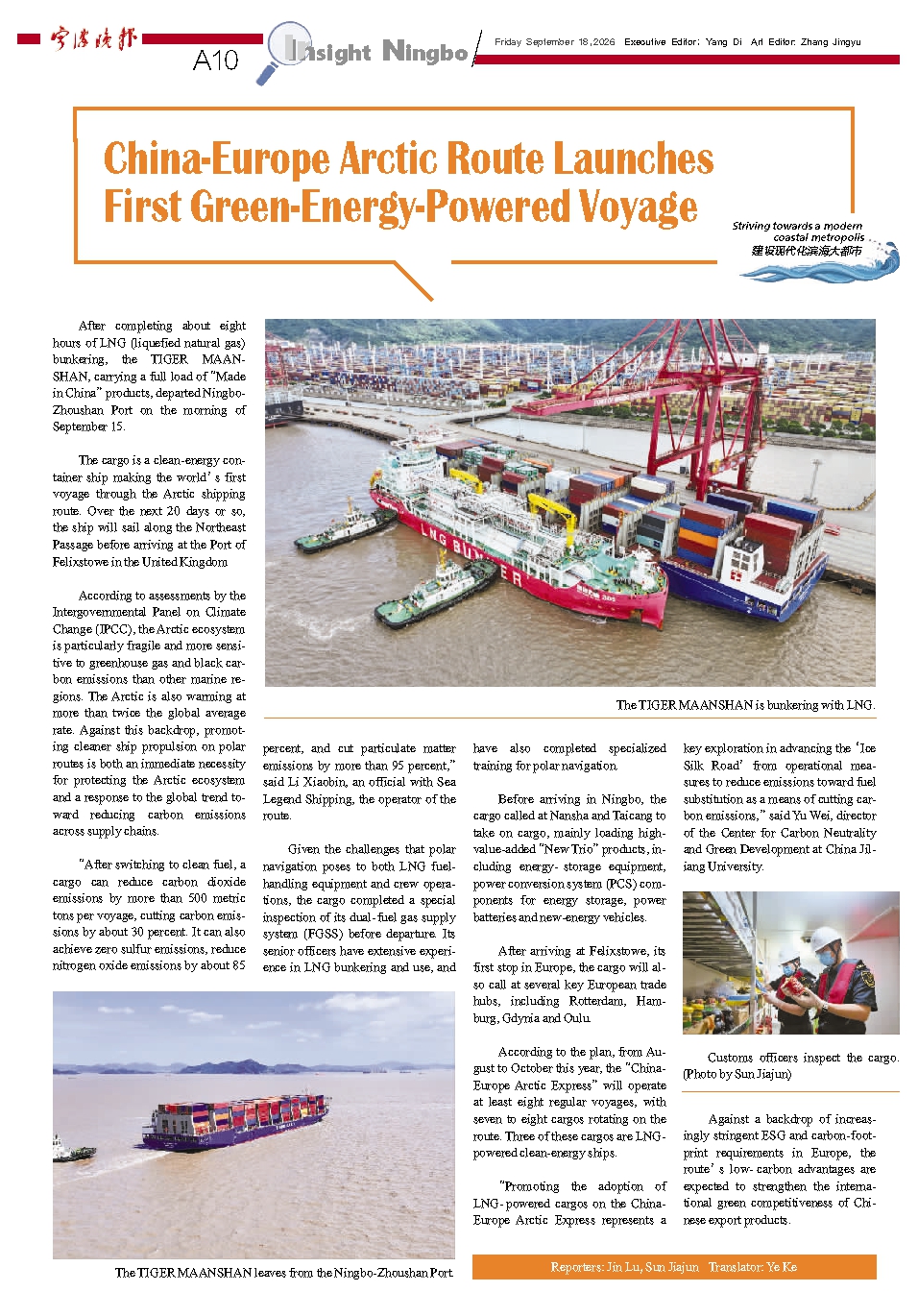


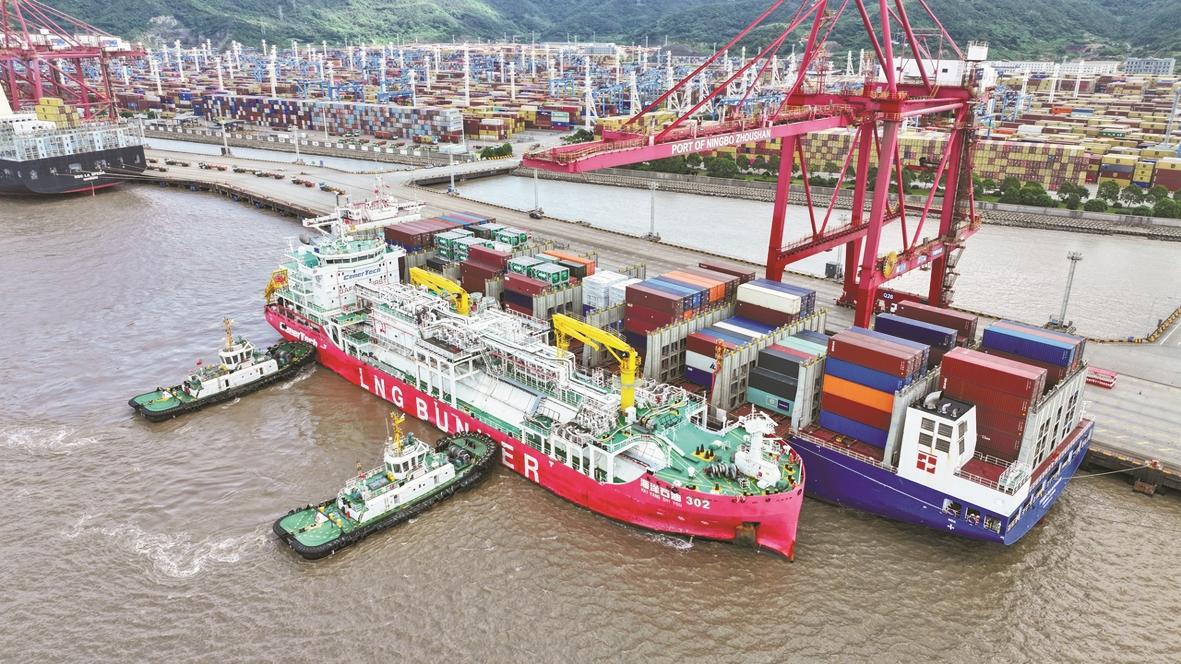
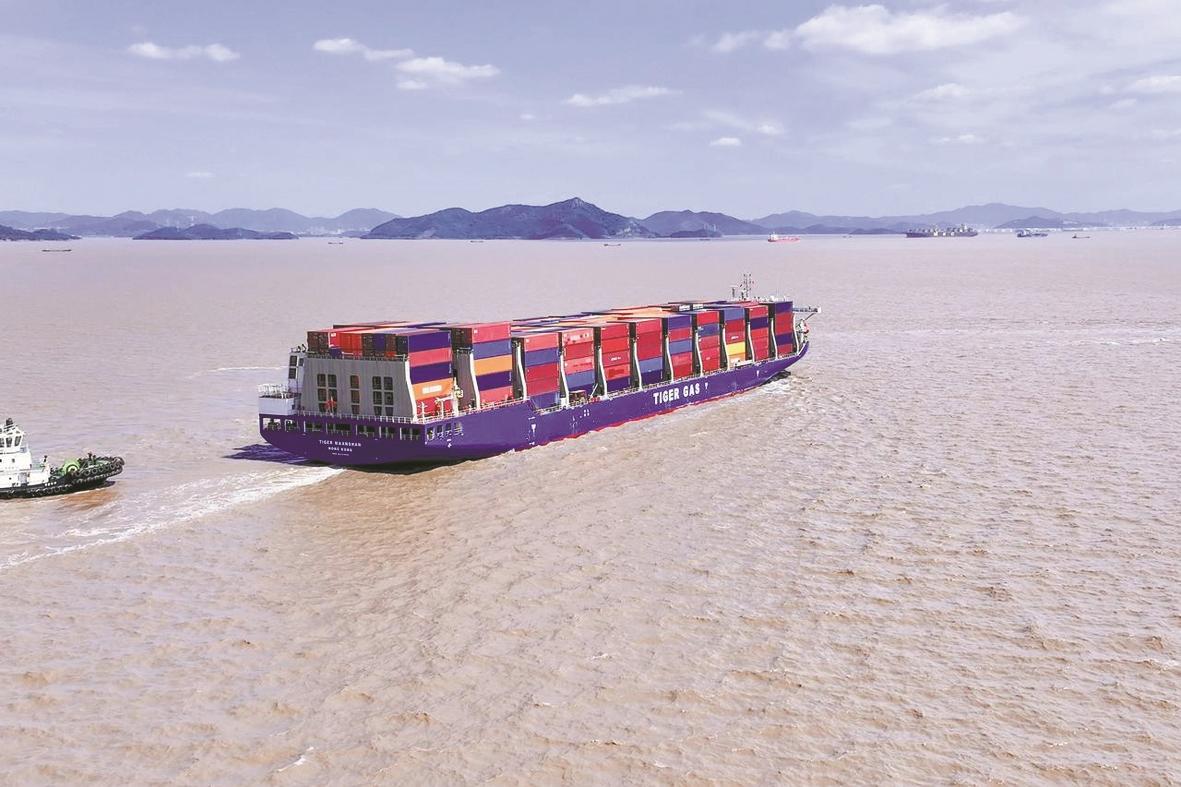

After completing about eight hours of LNG (liquefied natural gas) bunkering, the TIGER MAANSHAN, carrying a full load of “Made in China” products, departed Ningbo-Zhoushan Port on the morning of September 15.
The cargo is a clean-energy container ship making the world’s first voyage through the Arctic shipping route. Over the next 20 days or so, the ship will sail along the Northeast Passage before arriving at the Port of Felixstowe in the United Kingdom
According to assessments by the Intergovernmental Panel on Climate Change (IPCC), the Arctic ecosystem is particularly fragile and more sensitive to greenhouse gas and black carbon emissions than other marine regions. The Arctic is also warming at more than twice the global average rate. Against this backdrop, promoting cleaner ship propulsion on polar routes is both an immediate necessity for protecting the Arctic ecosystem and a response to the global trend toward reducing carbon emissions across supply chains.
“After switching to clean fuel, a cargo can reduce carbon dioxide emissions by more than 500 metric tons per voyage, cutting carbon emissions by about 30 percent. It can also achieve zero sulfur emissions, reduce nitrogen oxide emissions by about 85 percent, and cut particulate matter emissions by more than 95 percent,” said Li Xiaobin, an official with Sea Legend Shipping, the operator of the route.
Given the challenges that polar navigation poses to both LNG fuel-handling equipment and crew operations, the cargo completed a special inspection of its dual-fuel gas supply system (FGSS) before departure. Its senior officers have extensive experience in LNG bunkering and use, and have also completed specialized training for polar navigation.
Before arriving in Ningbo, the cargo called at Nansha and Taicang to take on cargo, mainly loading high-value-added “New Trio” products, including energy-storage equipment, power conversion system (PCS) components for energy storage, power batteries and new-energy vehicles.
After arriving at Felixstowe, its first stop in Europe, the cargo will also call at several key European trade hubs, including Rotterdam, Hamburg, Gdynia and Oulu.
According to the plan, from August to October this year, the “China-Europe Arctic Express” will operate at least eight regular voyages, with seven to eight cargos rotating on the route. Three of these cargos are LNG-powered clean-energy ships.
“Promoting the adoption of LNG-powered cargos on the China-Europe Arctic Express represents a key exploration in advancing the ‘Ice Silk Road’ from operational measures to reduce emissions toward fuel substitution as a means of cutting carbon emissions,” said Yu Wei, director of the Center for Carbon Neutrality and Green Development at China Jiliang University.
Against a backdrop of increasingly stringent ESG and carbon-footprint requirements in Europe, the route’s low-carbon advantages are expected to strengthen the international green competitiveness of Chinese export products.
Reporters: Jin Lu,Sun Jiajun Translator: Ye Ke