
By Jin Yuhan
A China-Europe freight train loaded with photovoltaic equipment, home appliances, electric vehicles and auto parts recently departed from the Yining Railway Freight Station in Ili Kazakh Autonomous Prefecture, Xinjiang, expected to arrive in Kazakhstan in just three days.
The regular service, operated by a Ningbo-based company, cuts shipping time and logistics costs for exporters by about one-third. Less than a year after its launch, it has become a key freight link for Ningbo companies expanding into Central Asian markets.
The growing flow of goods reflects how Ningbo manufacturers are expanding into emerging markets as trade ties among SCO members. Data from Ningbo Customs show that in the first seven months of this year, Ningbo's imports and exports with other SCO member states reached 62.31 billion yuan, up 11.3% year-on-year. Exports accounted for 53.55 billion yuan, a year-on-year increase of 18.7%, driven by mechanical and electrical products, high-tech goods and electric vehicles.
After years of adapting, how have Ningbo companies cracked these markets and earned a reputation?
Built for the Climate
From sandstorms in Central Asia to harsh winters in Russia and intense UV rays in the Persian Gulf, the varied climates of SCO member states present the first challenge for exporters.
"In the early years, we sold standardized wiper products to Iran. But we soon realized that the rubber strips would age and soften after prolonged sun exposure, and fail to work properly when the rainy season arrived," recalled You Yongbiao, general manager of Aido Wiper, a Ningbo-based manufacturer.
Countless experiments on wiper materials followed. R&D staff adjusted the ratio of natural rubber to silicone to combine the strengths of both materials. The new blended material retains the excellent elasticity of natural rubber while adding silicone's resistance to sun exposure and aging. Its service life doubled, helping the company quickly expand its presence in the Iranian market.
The company also redesigned its molds to produce thicker, reinforced snow wipers, with rubber strips and brackets optimized for winter weather. More than 500,000 such snow wipers are sold annually to the five Central Asian countries.
"Ningbo's exporters excel at identifying local environmental pain points and making product upgrades accordingly," said Zhu Youjun, president of the Ningbo Yongcheng Private Economy Research Institute.
Service Over Sales
Recently, Murat, a resident of Almaty, Kazakhstan, noticed a warning light come on in his Chinese-made car. He took it to a local after-sales service center, where mechanics quickly diagnosed the problem and restored the vehicle. It was up and running again in no time.
"In the past, when buying imported vehicles, even minor issues like this required waiting for spare parts to be shipped in, and that could take weeks. Now, service centers close to home can solve the problem," Murat said.
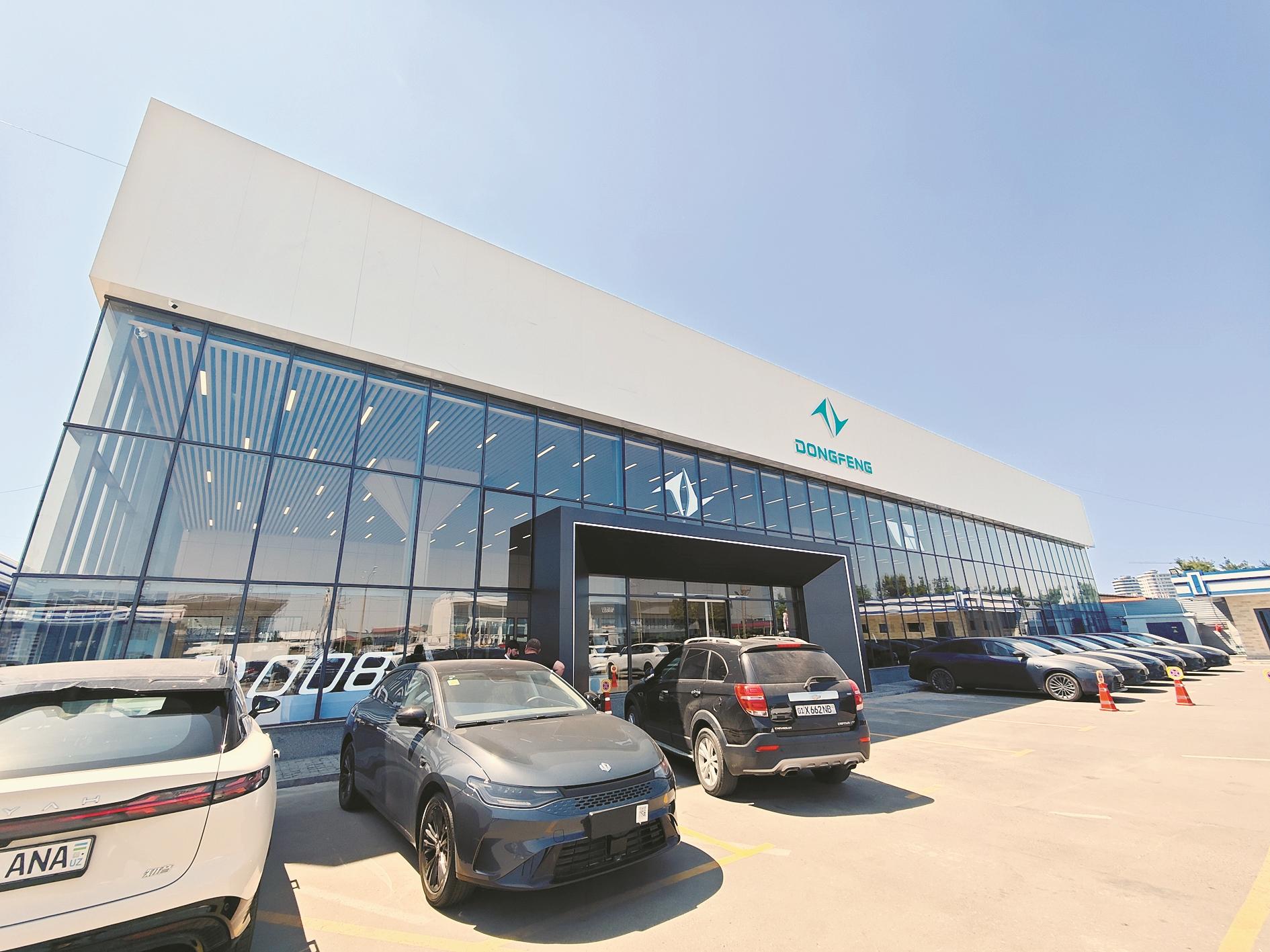
The car Murat bought was exported by Ningbo Xintianxia Holding Group Co., Ltd. The after-sales service network was also set up by the same firm.
In Kazakhstan, Uzbekistan, Kyrgyzstan, Russia and Belarus, the company has established more than 20 after-sales service outlets, with multiple locations in some countries.
"In the early days, many Chinese companies exporting to the Central Asian market only did wholesale business. Once the products were handed over at transit hubs like Bishkek, the deal was considered done," said Yao Biqin, director of the General Manager's Office at Xintianxia Group. However, Xintianxia has come to realize that merely selling vehicles is far from enough — service capability is the real key for sustaining a foothold in the local market.
With this in mind, Xintianxia Group has developed a strategy to synchronize vehicle inventory with after-sales service networks. In recent years, the company has maintained annual business growth of about 60%, and this year it aims to export 12,000 vehicles.
Xintianxia's approach reflects a broader trend among Ningbo companies, which are moving beyond simple exports to build localized service networks in SCO markets.
Designed for Local Living
Freight forwarders in Ningbo are also seeing more exporters turn to SCO member states as alternative markets.
"With ocean shipping routes becoming riskier this year, many small-home-appliance exporters are turning to other SCO member states," said Liu Meng, a representative from a freight forwarding company in Ningbo's Eastern New Town.
Countries differ vastly in family structures, dietary customs, energy conditions and consumer preferences. Without a genuine understanding of local life, products can hardly find their way into ordinary households.
Ningbo's home appliance makers have already taken note.
In Central Asia, for instance, many families preserve the tradition of living in large extended clans, with a single household often having more than a dozen members. Such families require significant storage for beef, mutton and dairy products. To meet this need, Ningbo Handian Electric Appliance Co Ltd has increased the capacity of its refrigerators and freezers, optimized adjustable shelves and specifically adapted them for storing large quantities of meat and dairy.
For the Indian and Central Asian markets, Ningbo Vasion Electric Appliance Co Ltd has enlarged the grilling area of its barbecue grills and added multi-tier racks to accommodate large-family dining needs.
In the first seven months of this year, Vasion exported 79.22 million yuan's worth of barbecue grills, air fryers, yogurt makers and other products to other SCO member states, a year-on-year increase of 3.9 times. The modified small appliances have received wide acclaim on local e-commerce platforms.
By tailoring products to local needs, Ningbo manufacturing is finding its way into homes across the region.