

"It was absolutely worth the trip."
"I could truly feel the charm of traditional Chinese culture."
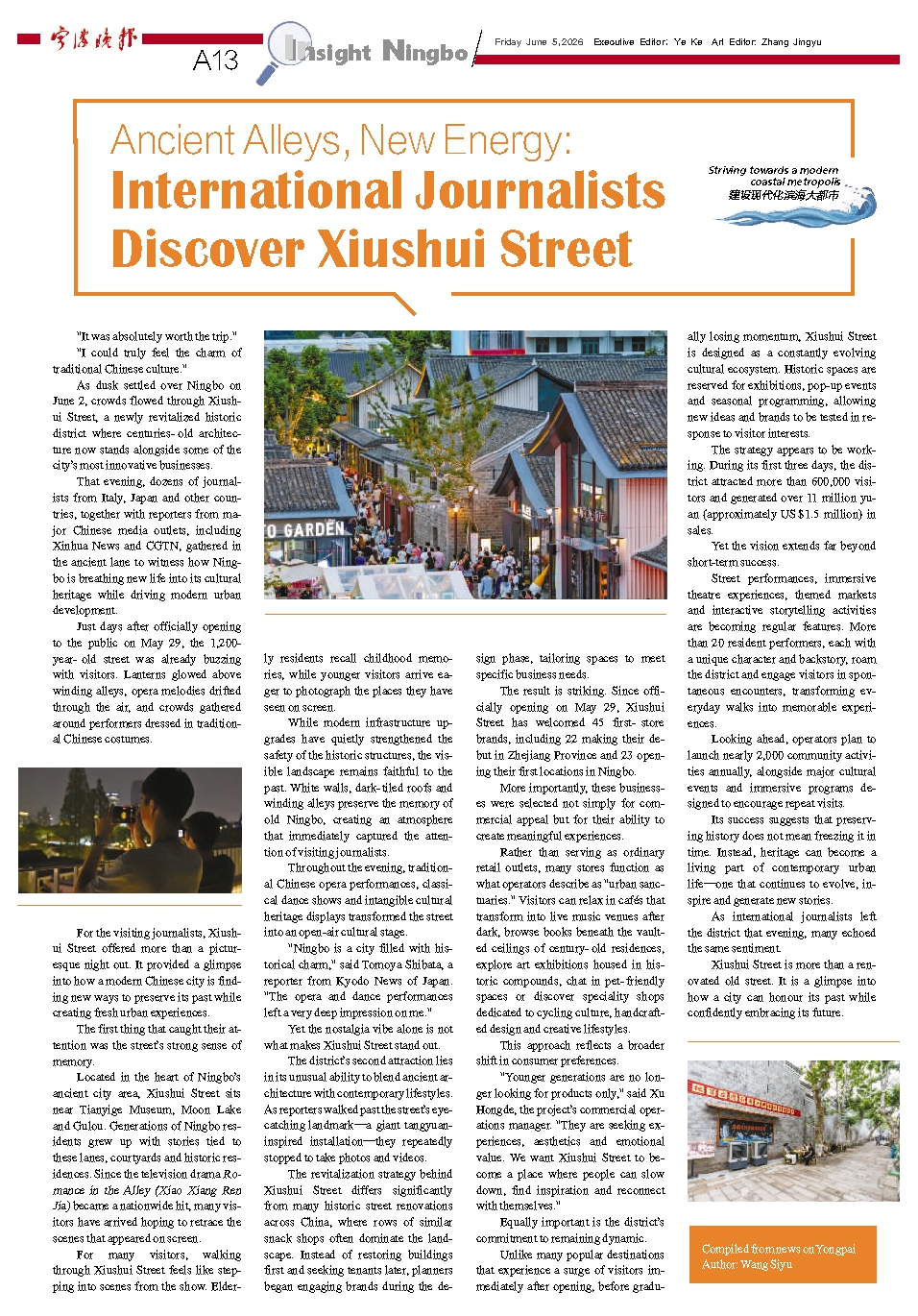
As dusk settled over Ningbo on June 2, crowds flowed through Xiushui Street, a newly revitalized historic district where centuries-old architecture now stands alongside some of the city's most innovative businesses.
That evening, dozens of journalists from Italy, Japan and other countries, together with reporters from major Chinese media outlets, including Xinhua News and CGTN, gathered in the ancient lane to witness how Ningbo is breathing new life into its cultural heritage while driving modern urban development.
Just days after officially opening to the public on May 29, the 1,200-year-old street was already buzzing with visitors. Lanterns glowed above winding alleys, opera melodies drifted through the air, and crowds gathered around performers dressed in traditional Chinese costumes.
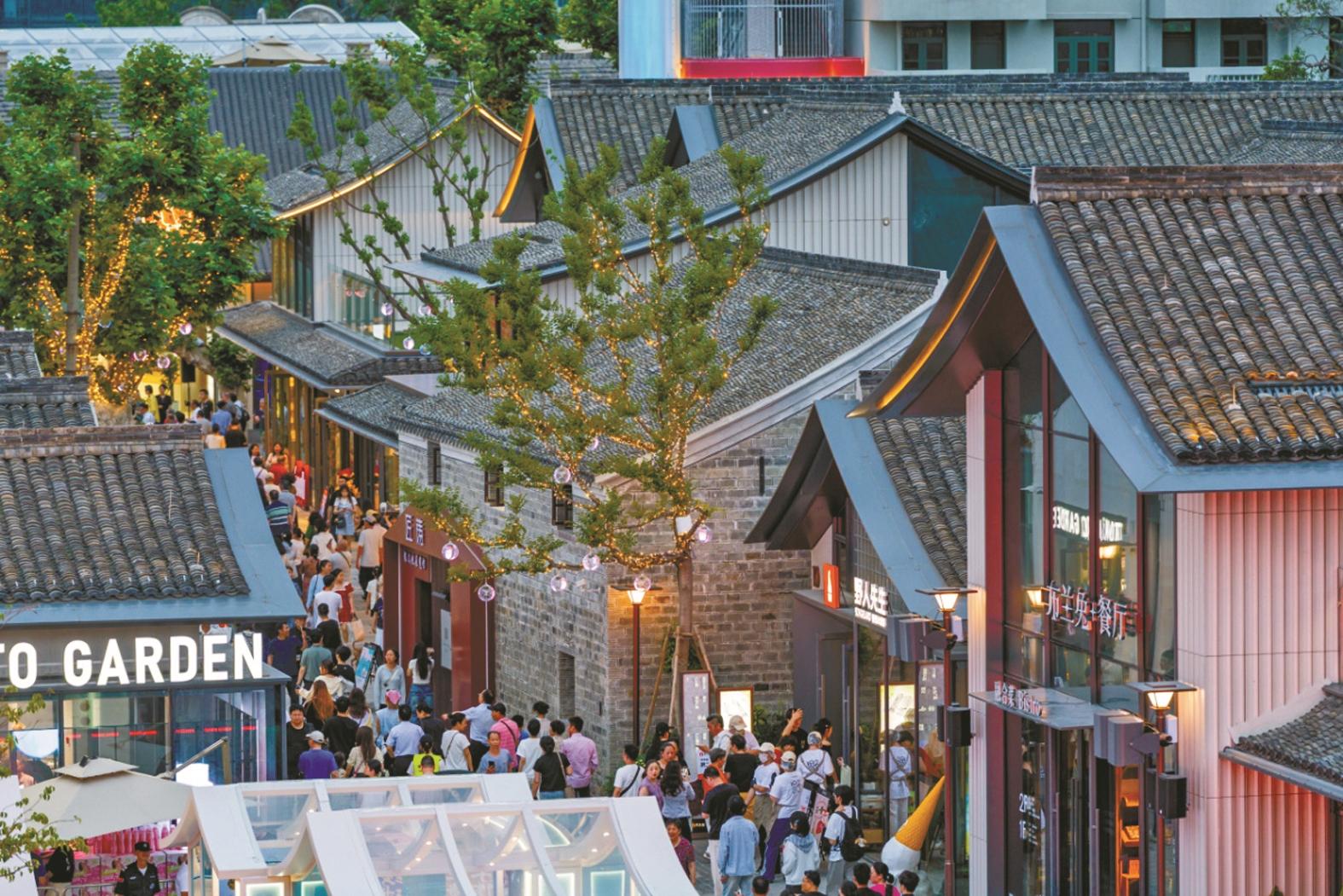
For the visiting journalists, Xiushui Street offered more than a picturesque night out. It provided a glimpse into how a modern Chinese city is finding new ways to preserve its past while creating fresh urban experiences.
The first thing that caught their attention was the street's strong sense of memory.
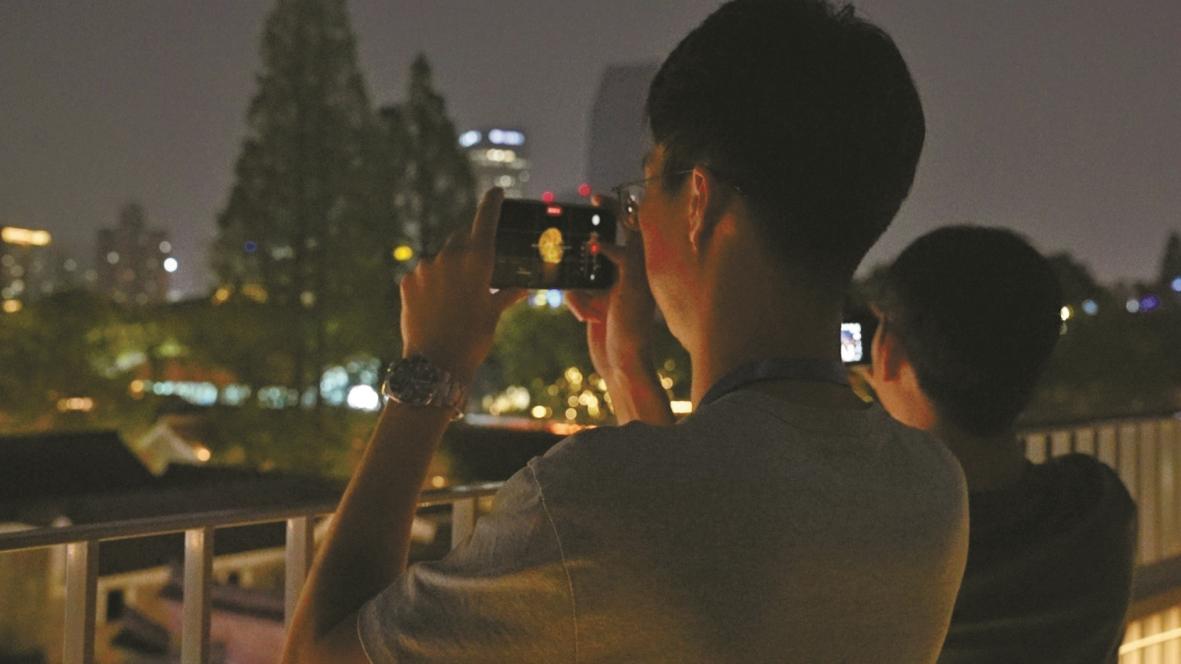
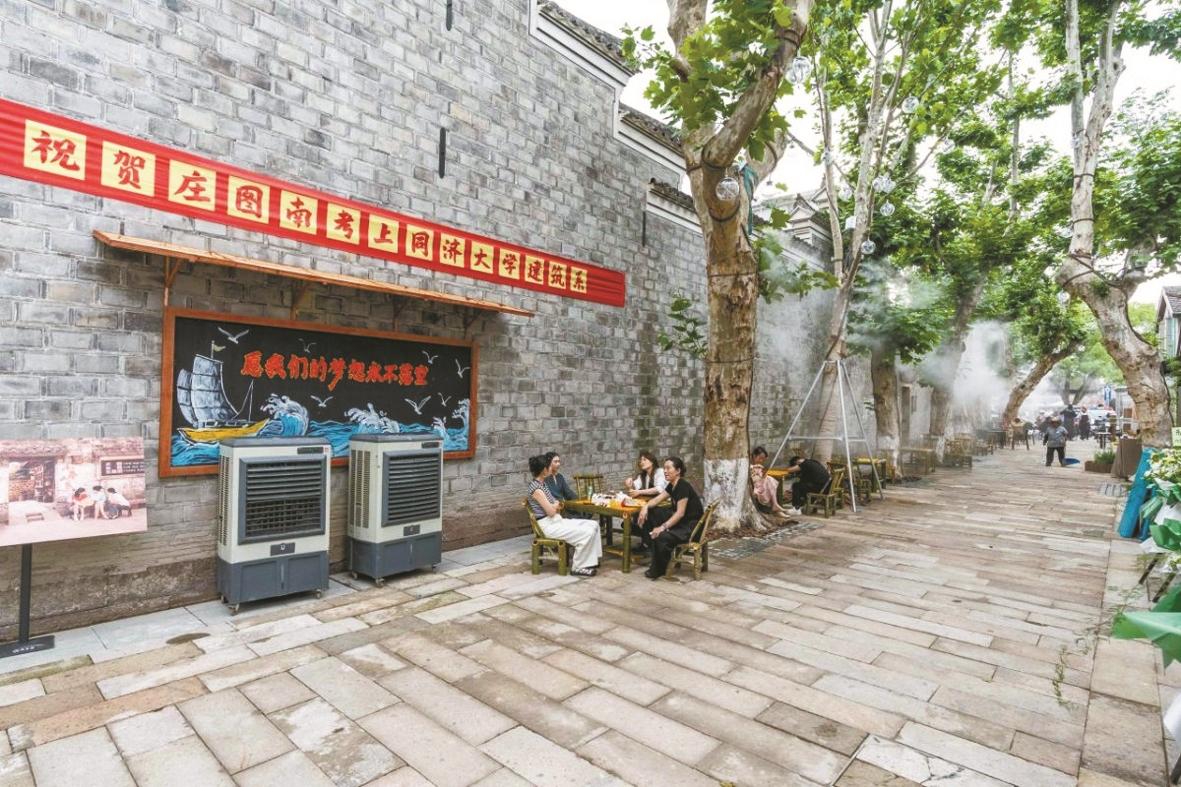
Located in the heart of Ningbo's ancient city area, Xiushui Street sits near Tianyige Museum, Moon Lake and Gulou. Generations of Ningbo residents grew up with stories tied to these lanes, courtyards and historic residences. Since the television drama Romance in the Alley (Xiao Xiang Ren Jia) became a nationwide hit, many visitors have arrived hoping to retrace the scenes that appeared on screen.
For many visitors, walking through Xiushui Street feels like stepping into scenes from the show. Elderly residents recall childhood memories, while younger visitors arrive eager to photograph the places they have seen on screen.
While modern infrastructure upgrades have quietly strengthened the safety of the historic structures, the visible landscape remains faithful to the past. White walls, dark-tiled roofs and winding alleys preserve the memory of old Ningbo, creating an atmosphere that immediately captured the attention of visiting journalists.
Throughout the evening, traditional Chinese opera performances, classical dance shows and intangible cultural heritage displays transformed the street into an open-air cultural stage.
"Ningbo is a city filled with historical charm," said Tomoya Shibata, a reporter from Kyodo News of Japan. "The opera and dance performances left a very deep impression on me."
Yet the nostalgia vibe alone is not what makes Xiushui Street stand out.
The district's second attraction lies in its unusual ability to blend ancient architecture with contemporary lifestyles. As reporters walked past the street's eye-catching landmark—a giant tangyuan-inspired installation—they repeatedly stopped to take photos and videos.
The revitalization strategy behind Xiushui Street differs significantly from many historic street renovations across China, where rows of similar snack shops often dominate the landscape. Instead of restoring buildings first and seeking tenants later, planners began engaging brands during the design phase, tailoring spaces to meet specific business needs.
The result is striking. Since officially opening on May 29, Xiushui Street has welcomed 45 first-store brands, including 22 making their debut in Zhejiang Province and 23 opening their first locations in Ningbo.
More importantly, these businesses were selected not simply for commercial appeal but for their ability to create meaningful experiences.
Rather than serving as ordinary retail outlets, many stores function as what operators describe as "urban sanctuaries." Visitors can relax in cafés that transform into live music venues after dark, browse books beneath the vaulted ceilings of century-old residences, explore art exhibitions housed in historic compounds, chat in pet-friendly spaces or discover speciality shops dedicated to cycling culture, handcrafted design and creative lifestyles.
This approach reflects a broader shift in consumer preferences.
"Younger generations are no longer looking for products only," said Xu Hongde, the project's commercial operations manager. "They are seeking experiences, aesthetics and emotional value. We want Xiushui Street to become a place where people can slow down, find inspiration and reconnect with themselves."
Equally important is the district's commitment to remaining dynamic.
Unlike many popular destinations that experience a surge of visitors immediately after opening, before gradually losing momentum, Xiushui Street is designed as a constantly evolving cultural ecosystem. Historic spaces are reserved for exhibitions, pop-up events and seasonal programming, allowing new ideas and brands to be tested in response to visitor interests.
The strategy appears to be working. During its first three days, the district attracted more than 600,000 visitors and generated over 11 million yuan (approximately US$1.5 million) in sales.
Yet the vision extends far beyond short-term success.
Street performances, immersive theatre experiences, themed markets and interactive storytelling activities are becoming regular features. More than 20 resident performers, each with a unique character and backstory, roam the district and engage visitors in spontaneous encounters, transforming everyday walks into memorable experiences.
Looking ahead, operators plan to launch nearly 2,000 community activities annually, alongside major cultural events and immersive programs designed to encourage repeat visits.
Its success suggests that preserving history does not mean freezing it in time. Instead, heritage can become a living part of contemporary urban life—one that continues to evolve, inspire and generate new stories.
As international journalists left the district that evening, many echoed the same sentiment.
Xiushui Street is more than a renovated old street. It is a glimpse into how a city can honour its past while confidently embracing its future.
Compiled from news on Yongpai
Author: Wang Siyu