

In the coastal city of Ningbo, where merchant ships once carried silk and stories across the seas, a different kind of narrative is now unfolding—one projected not on water, but on screens, plazas, and public imagination.
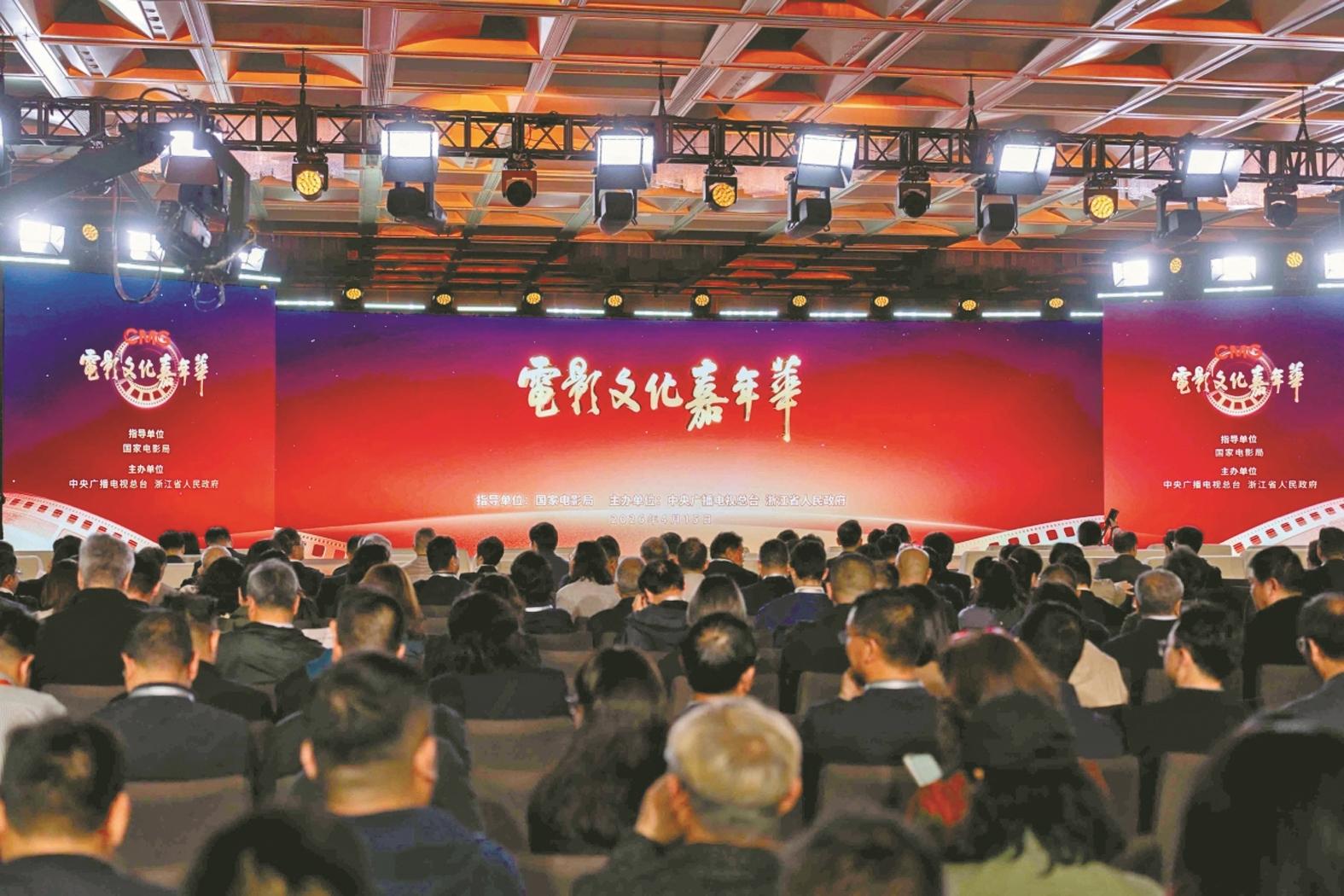
On the evening of April 15, a Film Culture Carnival opened with the kind of orchestration typically reserved for national events. Guided by the National Film Administration and co-hosted by China Media Group alongside the Zhejiang Provincial Government, the event is not merely a celebration of cinema. It is a carefully staged convergence of culture, industry, and identity—one that positions Ningbo as both a historical anchor and a forward-looking hub in China's film landscape.
The symbolism is deliberate. Ningbo, long known as a port city of openness and exchange, is now leaning into a different kind of connectivity: the ability of film to bridge time, geography, and experience.
From Screen to Street
What distinguishes this carnival from traditional film festivals is its embrace of the "experience economy"—a concept increasingly central to global cultural industries. But in Ningbo, the idea is grounded in something older: the tactile, lived traditions of Chinese craftsmanship.
In Tianyi Square, one of the city's busiest public spaces, cinema has quite literally spilled out into the streets. A themed market "Follow the Film to Explore Intangible Heritage"—brings together nearly 100 artisans from across China, showcasing close to a thousand items that range from regional handicrafts to film-inspired cultural products.
The effect is immersive. Visitors do not simply watch films; they move through a curated landscape of objects and techniques that have, in many cases, shaped the visual language of those films.
Among the featured figures is Chen Mingwei, a national-level inheritor of bone-and-wood inlay, a traditional craft deeply rooted in Ningbo's cultural history. Standing on stage during the opening ceremony, he spoke less like an artisan and more like a storyteller. He described how his work—once used in period film sets to recreate historical interiors—has undergone a revival, including the painstaking reconstruction of the intricate "ten-thousand-work bed," a symbol of peak craftsmanship in Ningbo furniture design.
But his narrative did not end in the past. In recent years, Chen has adapted these techniques into modern applications, from decorative art to fashion accessories, earning recognition at the prestigious Shanhua Awards. His presence at the carnival signals a broader shift: heritage is no longer static. It is being reinterpreted, recontextualized, and integrated into contemporary cultural production—including film.
The market itself reinforces this idea. Alongside Ningbo's own traditions—such as celadon ceramics and wood inlay—are contributions from across the country, creating a cross-regional dialogue. The inclusion of media IP-derived products adds yet another layer, blending state-backed storytelling with grassroots creativity.
In this setting, cinema becomes more than a medium. It becomes an ecosystem.
A Theater, A Timeline
While the outdoor spaces capture attention, the cinema remains the emotional and symbolic core of the event.
One venue in particular, Wanda Cinemas Premiere (Han's Department Store), has been singled out as a model for the industry. The recognition reflects a broader understanding of what a modern cinema can be—not just a place of entertainment, but a civic space embedded within the community.
Over the past year, the theater has implemented a series of targeted initiatives: accessible screenings for seniors, educational programs for students, and public-interest events for underserved groups. These efforts have reached thousands of residents, quietly redefining the role of cinema in urban life.
During the carnival, the theater takes on an additional function: that of a curator of memory.
In this sense, the theater becomes a bridge—linking past and present, individual memory and collective identity.
The City Behind the Camera
If the carnival's experiential elements capture the present, its historical narrative reaches much further back—into the very origins of Chinese cinema.
Ningbo's connection to film is not incidental; it is foundational. In 1913, director Zhang Shichuan, a native of the region, created what is widely regarded as China's first narrative film. This marked a decisive shift from simple visual recording to structured storytelling, laying the groundwork for an entire industry.
In the decades that followed, Ningbo-born innovators continued to shape the medium in profound ways. Engineer Zheng Chonglan developed the country's first 35mm sound camera, addressing a critical technological gap at a time when global cinema was transitioning into the sound era.
Director Sang Hu further expanded the artistic and technical boundaries of Chinese film. His work includes some of the country's earliest color productions and widescreen experiments, achievements that not only elevated production standards but also broadened the expressive possibilities of the medium.
Beyond individual contributions, Ningbo's influence extends into the institutional and industrial spheres. Run Run Shaw, whose studio empire helped define the golden age of Hong Kong cinema, exemplifies the entrepreneurial dimension of this legacy. Meanwhile, Yuan Muzhi played a pivotal role in shaping the organizational structure of China's film industry as its first national-level administrator.
This lineage continues into contemporary culture. Figures such as Stephen Chow have carried forward the creative spirit associated with Ningbo, influencing audiences across linguistic and cultural boundaries.
Taken together, these contributions form a compelling narrative: that Ningbo is not merely a participant in China's cinematic history, but one of its driving forces.
That narrative is being actively reinforced today. At the carnival's opening, organizers announced that the 2026 Yangtze River Delta International Youth Film Week will be held in Ningbo, signaling an investment in the next generation of filmmakers.
The strategy is clear. By aligning historical legacy with contemporary platforms, Ningbo is positioning itself as both a custodian of tradition and a catalyst for innovation.
For visitors, the experience is immediate and sensory—crowded markets, glowing screens, the hum of conversation. But beneath the surface lies something more enduring: a city making a case for its place in a national story.
And as the lights dim and the films begin, that case feels less like an argument and more like a quiet, unfolding truth.
Journalists: Zhou Xingyu, Liao Huilan
Yuan Xianming, Feng Shuhan
Translator: Pan Wenjie