
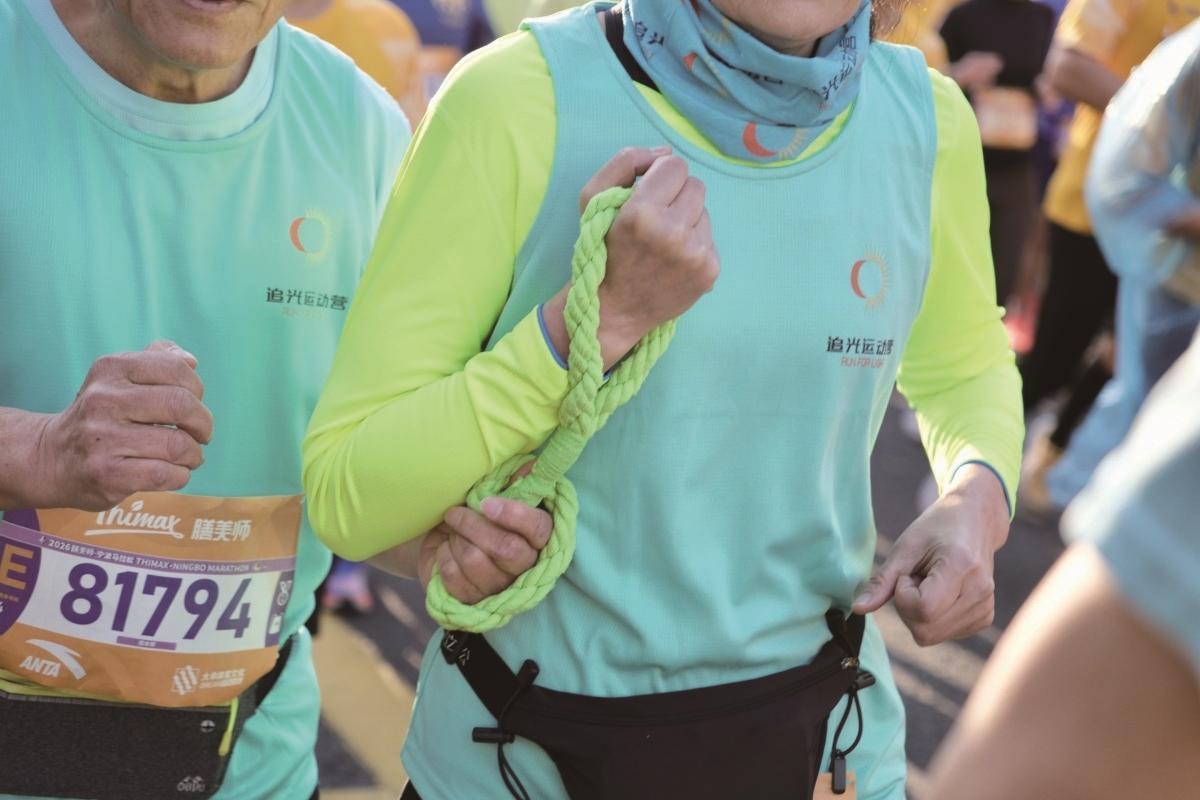
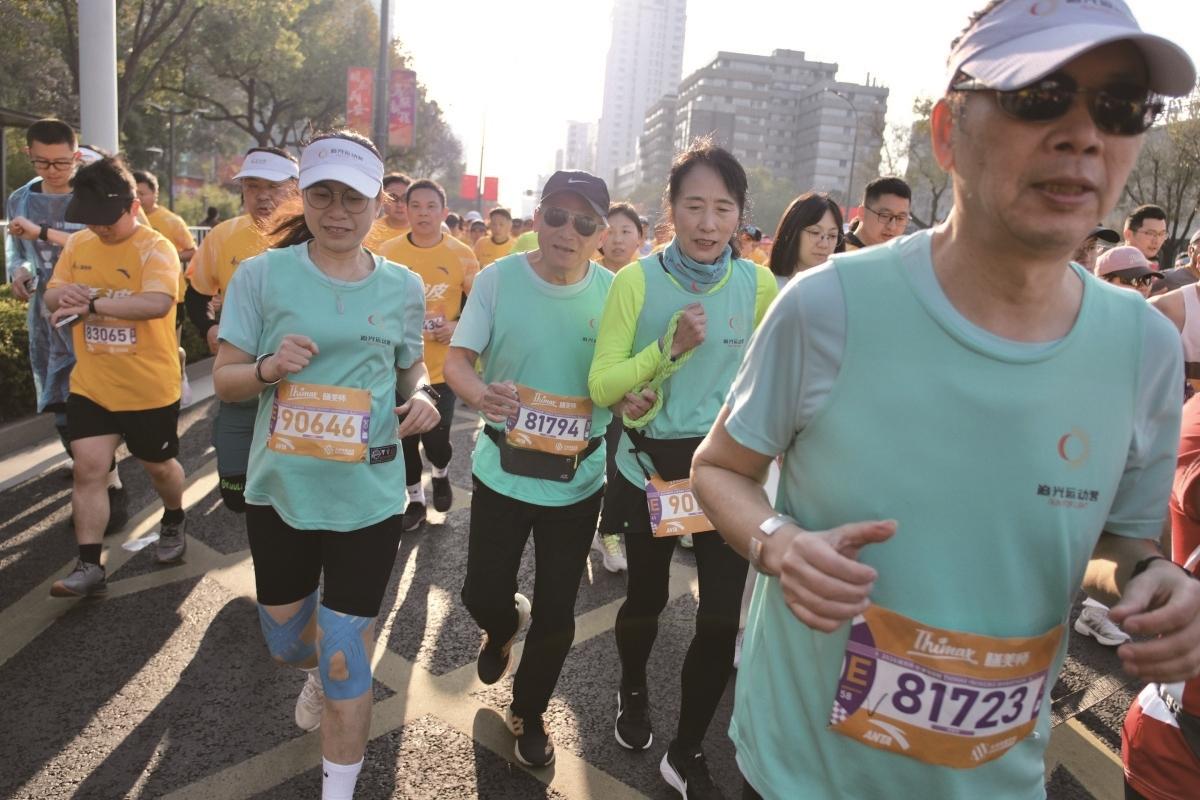
At 6:30 a.m. on March 15, sunlight lit the starting line of the Ningbo Marathon as 27,000 runners prepared to begin. Among the crowd, a fluorescent green tether rope stood out. At its ends were two runners in their seventies — 75-year-old visually impaired runner Tang Benrong and his 71-year-old guide runner Yin Hong.
Tang gently tugged the rope. Yin immediately turned.
“Brother Tang, what’s wrong?”
“Nothing,” he replied with a smile. “Just making sure you’re there.”
That rope carried trust, rhythm, and quiet understanding.
This year Yin Hong brought seven visually impaired runners and 21 guide runners to the Ningbo Marathon. After crossing the finish line, they received an unexpected surprise — a marathon medal engraved with Braille, a gesture that made them feel truly welcomed by the city.
For Tang Benrong, this was his second time running the Ningbo Half Marathon and his second time partnering with Yin Hong. “This year we didn’t even need to talk. One movement and we both knew whether to speed up or slow down,” Tang said. Three months earlier he had fractured his nose and had to rest for six weeks. Finishing the race in under three hours made him proud. “As long as I can still run, I’ll come back next year,” he said.
Yin Hong, a retired doctor, has been guiding visually impaired runners for 11 years. In 2015 she first saw guide running at an international race — a rope connecting two runners moving in the same rhythm. The moment deeply moved her. She later founded the “Chasing the Light Sports Club” in Shanghai, encouraging visually impaired people to step outside and take part in sports.
“What they need is not sympathy,” Yin said, “but equal opportunities to participate — the feeling of being seen and needed.”
For Zhu Hao, a runner born in the 1990s who lost his sight due to prenatal medication, running has become a way to release pressure. Once a member of Shanghai’s blind football team, he later developed a passion for technology and now works in AI training at a tech company, using screen-reading software to study large volumes of technical materials.
Since 2017, with the help of guide runners, Zhu Hao has completed more than ten marathons.
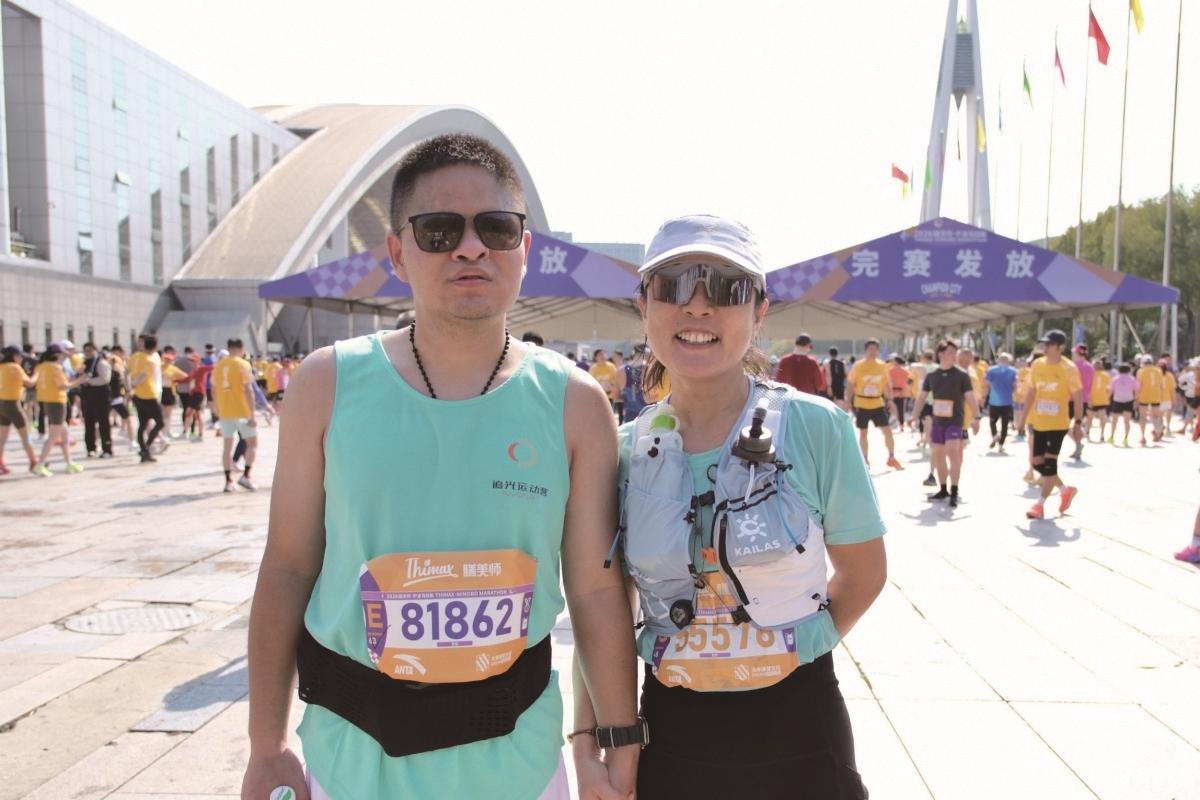
In Ningbo, his guide runner was Qu Yong, a 46-year-old financial professional who has volunteered as a guide runner for several years. Before the race she carefully prepared water and energy gels. Along the course her steady voice guided Zhu Hao step by step.
“People on the left — move a little right.”
“Turn ahead, slow down.”
At the 15-kilometer mark Zhu Hao began to tire, but Qu encouraged him to keep the pace steady. In the final kilometer he accelerated, aiming for a personal best.
When they crossed the finish line, the clock showed “1:56:23” — a new personal record.
“Without her, a PB would have been impossible,” Zhu Hao said, tears in his eyes. “She had to clear the path, keep the pace, and take care of everything for me. The only way I can repay her is with a good result.”
Qu smiled. “His PB makes me happier than my own. Being needed is a wonderful feeling.”
Soon after, a medal was placed in Zhu Hao’s hand. When his fingers touched the raised Braille dots, he slowly read the words “Ningbo Marathon.”
“It’s the first time I’ve ever touched Braille on a marathon medal,” he said. “It feels like this city truly understands us.”
Tang Benrong received his medal as well. Guided by Yin Hong, he felt the Braille letters and smiled quietly.
Behind that Braille medal is Ningbo’s broader commitment to supporting people with disabilities — from inclusive marathon policies to community rehabilitation centers and disability sports programs.
From the racecourse to local neighborhoods, the city is building a more inclusive environment where everyone has the chance to run their own race — and chase their own light.
Journalists: Hu Qi,
Chen Jinhui, Li Jialu
Translator: Ye Ke