


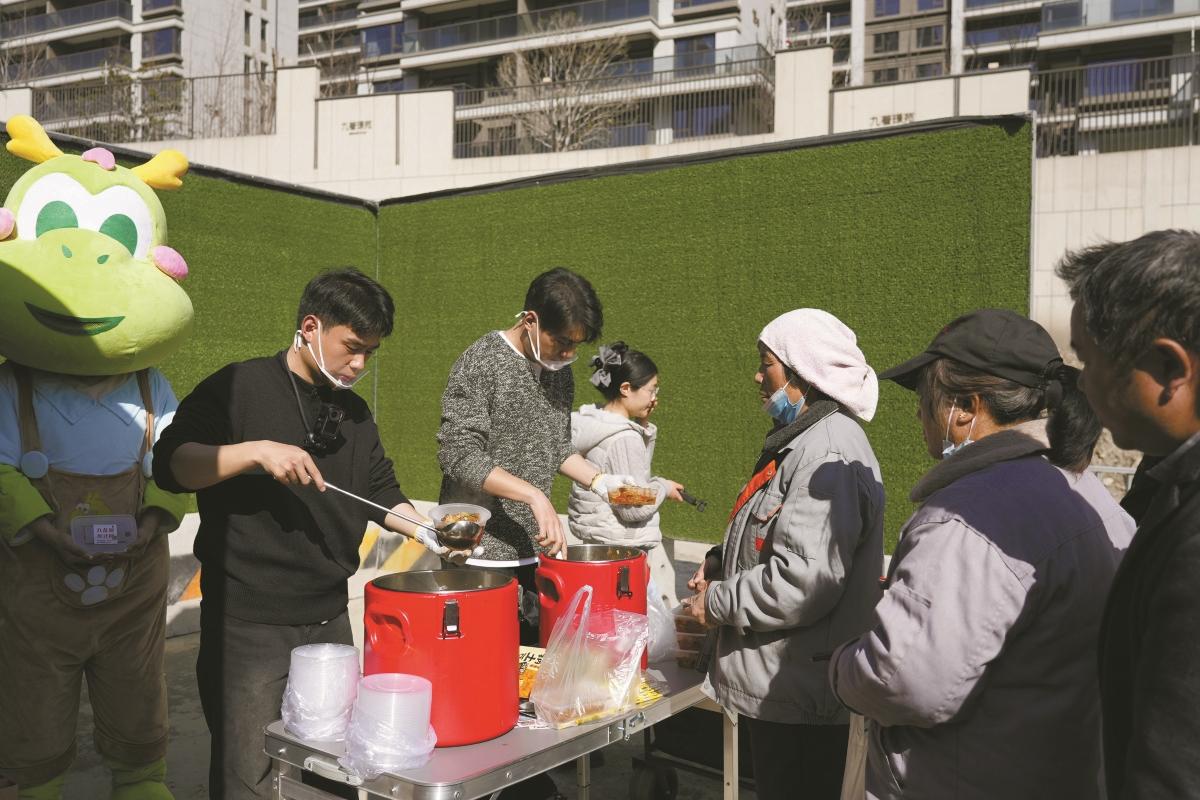
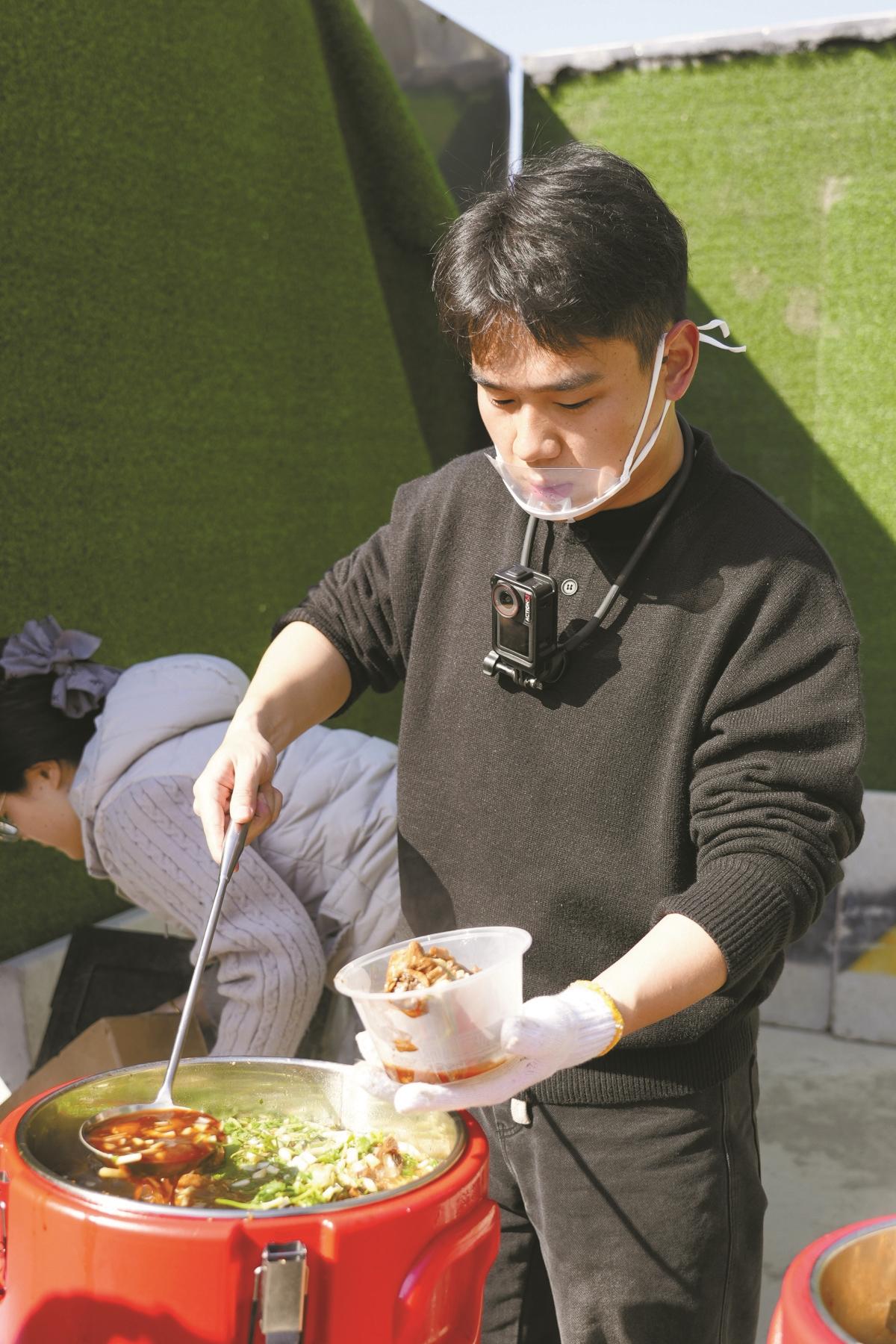
By late morning, steam drifts across a parking lot opposite a construction site in Jiulong Lake Town, Ningbo, in east China's Zhejiang Province. The air carries the familiar scent of braised pork and rice. Workers in hard hats line up calmly, lunch boxes in hand. Behind a folding table, Zhang Tengfei scoops rice, adds meat, and passes each box forward with practiced ease.
"Eat it while it's hot," he says with a smile.
Each meal costs no more than 10 yuan (about $1.43), a price he has kept since opening his stall. Online, Zhang is better known as "Afei 30," the creator of a popular series of short videos documenting his life as a street vendor. Filmed from a first-person perspective, his clips capture early-morning food prep, casual lunchtime conversations, and the steady routines of selling boxed meals. His Douyin account has more than 820,000 followers and over 10 million likes.
A New Start
Zhang, 28, a migrant worker from Fuyang in Anhui Province, became unemployed last November when his interior design company in Ningbo closed amid restructuring. "You immediately start thinking about practical things," he said. "Rent, food, daily expenses."
Looking for work, he noticed a trend on social media: street vendors selling "10-yuan meals that fill you up" near construction sites. The idea struck a chord. He set up a small stall near a construction site close to his home and began documenting his daily life in short videos.
With no professional culinary experience, Zhang learned on the job—watching tutorials, experimenting at home, and adjusting recipes through trial and error. He settled on simple, filling dishes: braised pork rice for 10 yuan and a mixed vegetable stew with ribs and soup for 8. Modestly priced and generously portioned, the meals quickly became popular with construction workers.
"I told the workers from the start that prices wouldn't go up," he said. The sincerity and consistency of his efforts also drew an online following, many of whom tune in to watch the rhythms of life at the stall—from tired hands receiving food to lighthearted lunchtime conversations.
A Growing Circle of Support
As his online following grew, so did the sense that Zhang's small stall had become more than a place to eat. His "street stall diary" caught the attention of the Jiulong Lake Administration for Market Regulation in Ningbo's Zhenhai District.
"We first noticed him online," recalled Liu Xue, deputy director. "Our first instinct was to reach out and understand the situation."
When officials learned Zhang planned to operate long-term, they coordinated with the town's construction and urban management departments to find a safer, fixed location. The town quickly designated an area, while market regulators guided him through the paperwork for a health certificate, business license, and food operation filing. Temporary fencing was installed to improve safety and sanitation.
"Site selection was carefully considered," Liu said. "We had to ensure both personal safety and food safety, while helping him run his business properly."
By early January, Zhang's license was ready. Around 40 construction workers visit daily. Profits from food sales remain modest—about 30 yuan ($4) a day—but income from his social media presence helps cover costs and allows him to keep prices low.
"I promised I wouldn't raise prices," he said. "The videos and my fans help me keep that promise."
The routine has brought structure back into his life. Losing his job had left him uncertain. Running the stall—and forming daily connections with workers—gradually restored his confidence.
"At first, I just wanted to make a living," he said. "Now I think more about responsibility."
A Shared Table in Winter
On January 14, Zhang's stall became the center of a larger winter gathering near an affordable housing construction site. Alongside his usual boxed meals, he served local specialties: braised chicken, huizhituan (brown glutinous rice balls), and traditional Ningbo tangyuan. Workers gathered around, faces brightening as they savored the food and exchanged cheerful words.
"His meals are already good every day, but today with all these specialties, it feels really satisfying," said Zeng Xinjing, a construction worker from Guizhou Province and a regular customer. "It tastes like home."
For Zhang, the event carried quiet significance. "At first, I wasn't sure anyone would come," he said. "Now I think more about how to take care of people."
As winter continues, the stall remains a daily gathering point. Steam curls into the crisp air. Workers eat, chat briefly, and return to their jobs. Zhang cleans up, packs away his table, and begins preparations for the next day.
Running the stall has helped him regain confidence and stability after a period of uncertainty. For many online viewers, his videos offer a glimpse into a quieter side of urban China, shaped by consistency, mutual respect, and small acts repeated day after day. As one commenter wrote beneath a recent clip: "This isn't just about food. It's about someone finding their footing again."
Adapted by Pan Wenjie from an original report by Zheng Kaixia, Ningbo Evening News.