

By Zhao Yu
Some come to Ningbo from afar to build their businesses, while others leave the city to pursue opportunities elsewhere, often maintaining close ties to the place where they started. Through these exchanges, entrepreneurs, scholars and professionals have become informal ambassadors of the city's development.
Known for its pragmatic approach, Ningbo has long emphasized steady support for industry and enterprise. Local officials say efforts to build a strong business environment focus on practical measures—from streamlining services to supporting companies as they grow.
For many observers, the experiences of those who work and invest in the city offer insight into how Ningbo has sustained its economic growth over the years.
From Bangkok to Beilun
In 1922, eastern Guangdong was hit by a devastating typhoon. Seawater flooded inland, crops were destroyed, and over eighty thousand people perished. When news reached Thailand, Xie Yichu, who had already established himself in Bangkok, was profoundly shaken.
He had arrived three years earlier on a junk with little more than eight silver dollars and a bag of vegetable seeds. In 1921, he rented a small 20-square-meter shop in Bangkok and opened a seed store named "Chia Tai Chong."
Later, Xie Yichu had four sons: Xie Zhengmin, Xie Damin, Xie Zhongmin, and Xie Guomin. Strung together, the middle characters of the names formed the phrase "Zheng Da Zhong Guo" ("May China be great and prosperous"). He sent all his sons back to China for their education, hoping they would never forget their roots.
In 1979, Xie Guomin arrived in Shenzhen to explore investment opportunities, as instructed by his father. Even though China's Reform and Opening up had already begun, Shenzhen was still a small fishing village, and most foreign investors were hesitant. But Xie Yichu told his son, "Even if we make no money due to policy uncertainty, we could still regard our investment as a contribution to our homeland."
In 1981, Chia Tai Conti (Shenzhen) Co., Ltd. received China's very first Foreign Investment Enterprise Approval Certificate—numbered "0001".
The company's connection with Ningbo began in 1991. At a time when many multinational companies were still uncertain about China's prospects, Chia Tai invested $100 million in Beilun District to build an advanced grain and oil processing facility. More than three decades later, the company's cumulative investment in Ningbo has exceeded 10 billion yuan. In Cixi alone, it has established more than 30 companies within a single industrial park.
The Xie family says the decision to invest was not without hesitation. Over time, however, continued government support helped strengthen confidence. During the relocation of one subsidiary, for example, local authorities provided coordinated services from project approval through facility start-up. In another instance, when an egg production company faced feed supply disruptions, it was included in a government program to safeguard essential supplies and the issue was resolved within three days. Such experiences over more than a decade of operations in Ningbo have reinforced the company's confidence in the city's business environment.
Turning Crisis into Opportunity
In his book Thirty Years of Turbulence, Chinese economic commentator Wu Xiaobo recalls how entrepreneurs from rural Yuyao travelled all over the country in the 1980s, carving out a market for their telescopic antennae.
The story reflects a broader pattern in Ningbo's development. From early manufacturing of molds and small household appliances, the city has gradually expanded into sectors such as green petrochemicals, high-end equipment, new energy and advanced materials. Clusters of small workshops have since grown into nationally recognized "Little Giant" SMEs specializing in niche technologies.
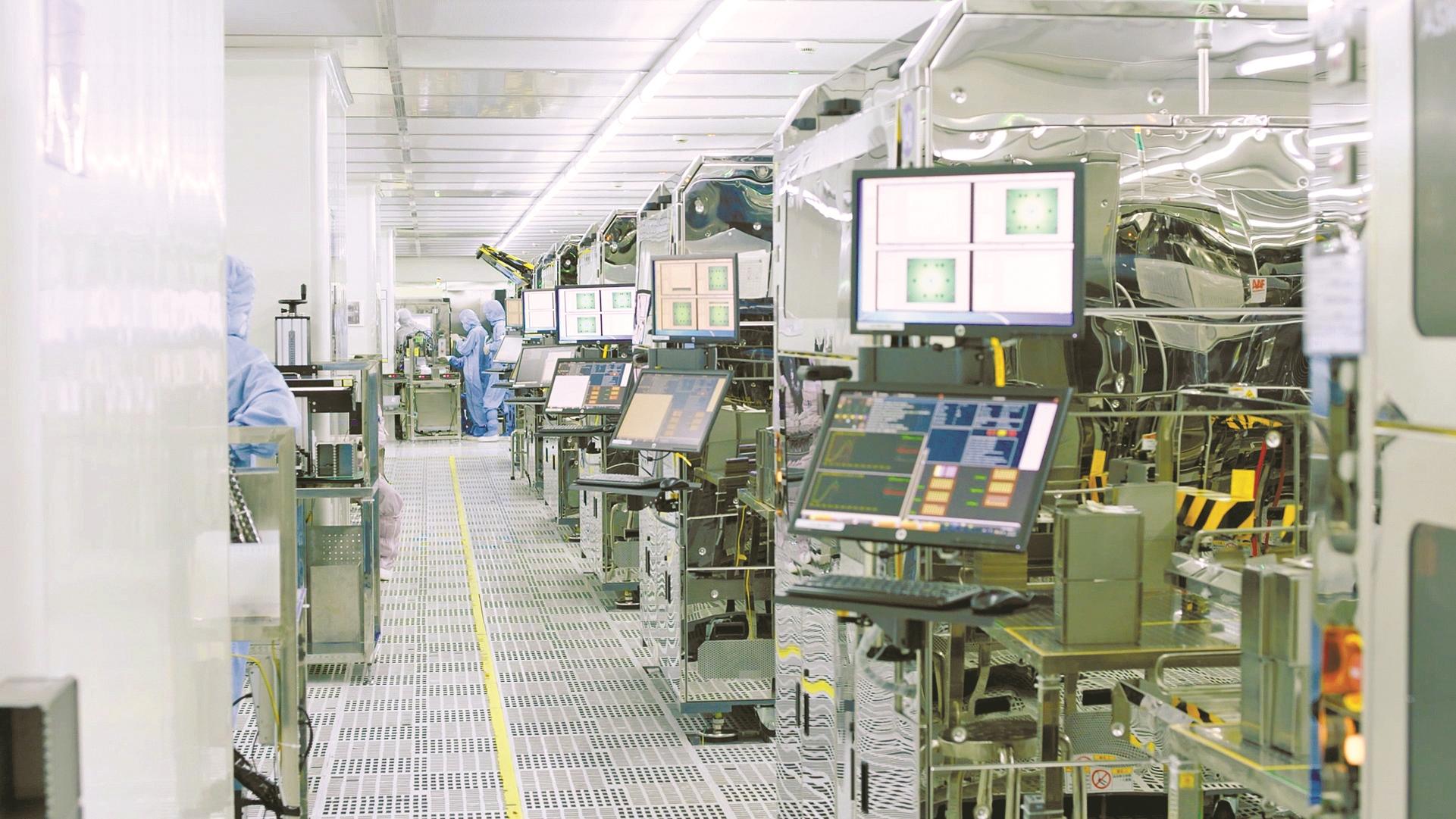
Ningbo's innovation has remained closely tied to manufacturing. Battery producer Sonluk, for example, has spent decades refining product technology and manufacturing processes. Meanwhile, Joyson Electronics has evolved from a traditional auto parts supplier into a global developer of intelligent automotive systems.
In November 2020, Wu visited Cixi for the first time, at a moment when global economic uncertainty and industrial restructuring were placing pressure on manufacturers. Cixi, however, presented a different picture. As one of Zhejiang's leading county-level economies, the city has become a major hub for home appliance production. Of China's top 100 home appliance exporters, 32 are based in Cixi, where above the designated size appliance manufacturers generate more than 70 billion yuan in output and employ about 150,000 people.
Wu encouraged local entrepreneurs with a quote from Winston Churchill: "Never let a good crisis go to waste." He believes current shifts in the international landscape could also bring new opportunities for Ningbo's manufacturers. Demand linked to reconstruction and infrastructure renewal in Europe, he noted, may create significant market potential.
This past Spring Festival, robotics took center stage. Wu's team researched the humanoid robotics industries in cities across China; their findings identified Ningbo as a leading hub for supply chain competitiveness in the sector. Rather than competing with major technology hubs in areas such as algorithms or large-scale AI models, Wu argues that Ningbo's opportunity lies in integrating new technologies with its manufacturing strengths.
Applying AI technology to manufacturing, Ningbo's forte, is the most promising path for the city's future growth.