



By Zhao Yu
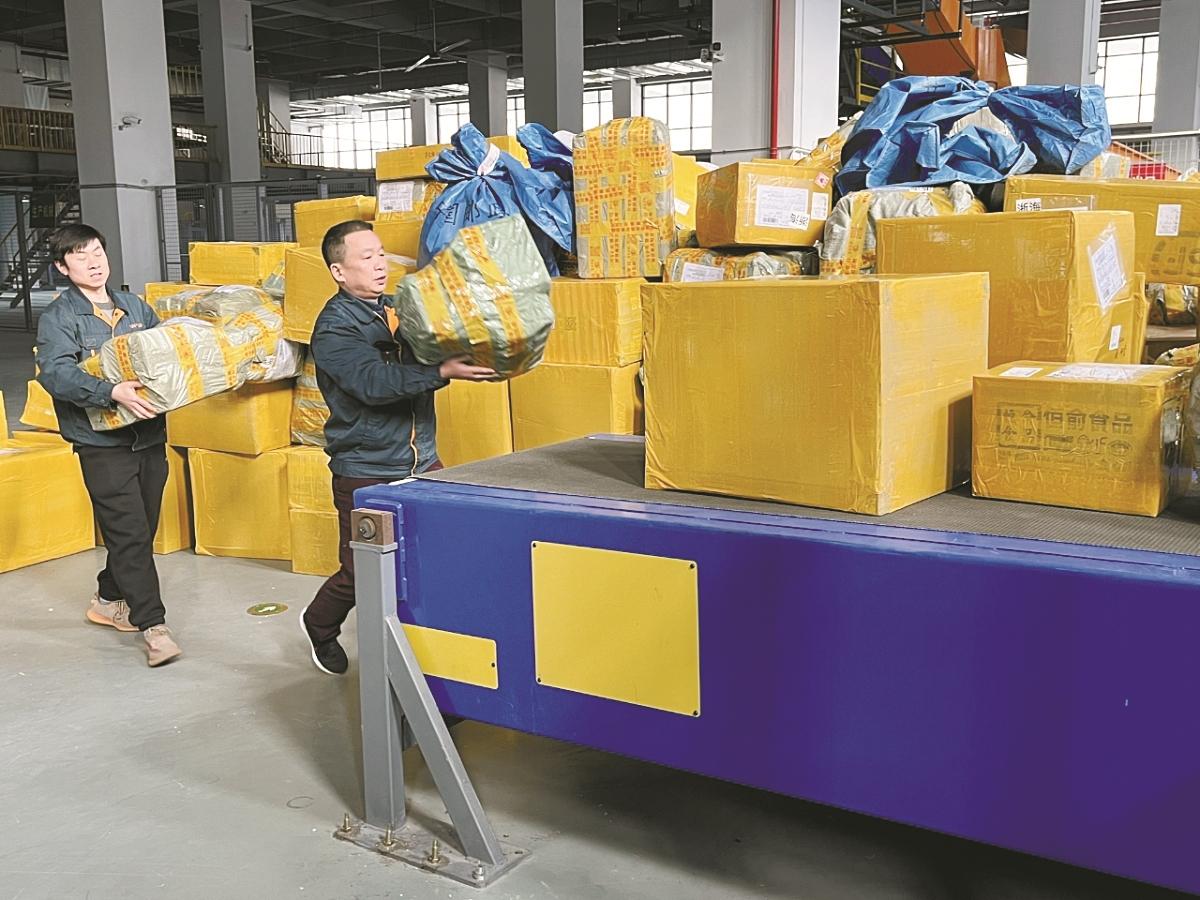
Ningbo's cross-border express delivery sector is surging. Data from the Municipal Postal Administration shows that in 2025, the city's express shipments to Hong Kong, Macao, Taiwan, and overseas rose 19% year-on-year—outpacing the national average. At Ningbo Lishe International Airport, China Post handled 215% more export parcels from January to November. "This reflects a shift from a port-centric model to integrated sea-land-air logistics," said an official from the Municipal Postal Administration. Multiple forces are driving the sector's rapid expansion.
The "Triple Engine" Driving Growth
Three main forces are fueling the sector: market demand, enterprise innovation, and supportive policies.
Both cross-border e-commerce imports and exports have spurred demand. Supported by national strategies, favorable policies, geographic advantages, improved logistics services, and growing global consumer demand, Ningbo's cross-border e-commerce sector has seen steady growth. Over 70% of Ningbo's international express parcels last year were e-commerce shipments, with made-in-China electronics, precision instruments, and home appliances accounting for roughly 45% of the export volume. Apparel, footwear, hats, and home goods also take up a sizeable portion of e-commerce exports.
"High shipping costs used to deter overseas buyers. Now, group-buying models consolidate multiple orders, cutting costs and delivery time," said Zhu Zhehong, head of China Post Group Ningbo Branch's International Department. Customers place orders via platforms like Taobao or JD.com; parcels are processed in Ningbo's consolidation warehouses before being shipped abroad.
Chinese logistics companies are actively adapting by innovating their business models and establishing overseas warehouses to expand their global reach. Cainiao has built warehouses across Europe, the U.S., and Southeast Asia, creating a global logistics network. SF Express has launched specialized intercontinental routes like the "1 Euro to China" service, using digital tracking to cut costs, speed up delivery, and improve transparency.
Policy support also plays a key role. Ningbo has rolled out measures to facilitate cross-border trade, including international route incentives, one-stop clearance for products from Central and Eastern Europe, market expansion subsidies, and smart port upgrades. "These reforms streamline customs and transport, creating a policy environment for growth," said the postal official.
Shifting Markets Drive Broader Growth
"Last year, the industry focused more on the end-consumer experience, which helped drive growth in emerging markets such as Southeast Asia," said Xu Keke, General Manager of Zhejiang Xuri International Logistics Group, a leading cross-border logistics consolidation company in Ningbo.
At the group's Nuoda Transshipment warehouse, an automated sorting system efficiently organizes a vast array of e-commerce parcels of all sizes, preparing them for shipment to customers around the world. The service supports more than 4 billion consumers outside of China.
Once a customer places an order online, the system assigns them a virtual storage space. "We handle receiving, photographing, storing, consolidating, and shipping according to each consumer's instructions," Xu said. This personalized approach has significantly improved response times and operational efficiency.
Service upgrades are reshaping Ningbo's express industry. Traditional markets like Japan continue to grow rapidly, aided by proximity, frequent flight routes, and streamlined customs clearance. Meanwhile, Southeast Asia is expanding fast, driven by local e-commerce platforms such as Shopee and Lazada and the growing integration of Chinese supply chains.
Emerging markets, including Central and Eastern Europe and Russia, are also becoming key growth areas, benefiting from policy incentives and platform partnerships. Last year, Southeast Asia, Japan-Korea, and Europe-America each accounted for roughly equal shares of Ningbo's cross-border express volume, with Southeast Asia posting the fastest growth. Countries such as Indonesia and Malaysia are showing strong potential.
High-value-added goods are increasingly dominating air cargo exports, providing stable growth for the sector. As Ningbo's international flight network expands, more cargo that previously passed through Shanghai and Hangzhou is now departing directly from Ningbo. "We prioritize supporting local exports whenever Ningbo flights are available," said Zhu Zhehong of China Post Group Ningbo Branch.
To handle the scale, fragmentation, and time sensitivity of cross-border retail logistics, multimodal transport solutions are expanding. Ningbo Zhoushan Port, for example, integrates China-Europe express shipping with overseas warehousing to offer end-to-end logistics that combine the cost efficiency of maritime transport with the speed of local delivery.