


By Zhao Yu
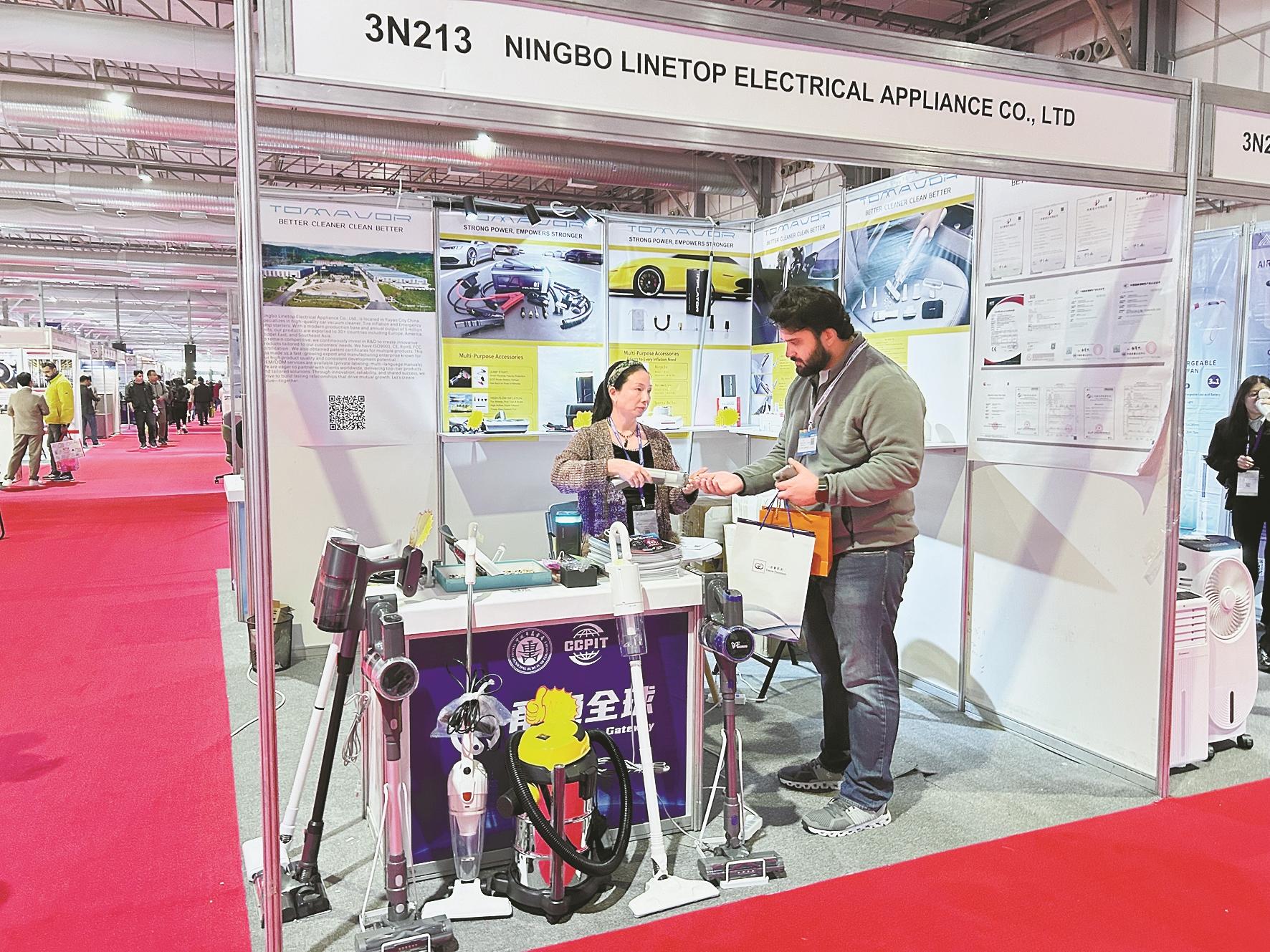
The 2025 China (Saudi Arabia) Export Brand Joint Exhibition was held recently, drawing strong interest from global buyers and offering new market opportunities for Ningbo-based companies.
As the largest consumer goods exhibition held in Saudi Arabia this year, the three-day event attracted an estimated 20,000 professional buyers. Intended transaction value exceeded $60 million, according to preliminary figures.
For many Ningbo exporters, the exhibition marked a strategic step toward diversifying overseas markets.
Saudi Arabia Emerges as a New Growth Market
"It was our first time exhibiting in the region, and demand was stronger than we anticipated," said Chen Jin, director of Ningbo Z & H Foreign Trade Co., Ltd. The company's first appearance in the Middle East exceeded expectations. Chen noted that the firm secured dozens of preliminary orders during the event.
Z & H, which produces a wide range of apparel, had long focused on European and U.S. markets, where orders once accounted for more than 90% of its business. In recent years, however, the shifting geopolitical landscape prompted the company to seek growth in new markets - such as the Middle East. "We showcased men's wear and sportswear, including standard designs as well as products featuring tie-dye techniques and functional fabrics with UV protection and quick-drying properties," said Chen.
Other Ningbo companies reported similar interest. Luo Tao, whose team was conducting market research in Riyadh alongside the exhibition, said local retail visits revealed strong demand for household appliances such as heaters, though product offerings remained relatively conventional.
"Saudi Arabia has a young consumer base," Luo said. "Products that combine competitive pricing with distinctive design and practical functions align well with local demand, both online and offline."
Building a Stronger Foothold in Saudi Arabia
This year marks the 35th anniversary of diplomatic relations between China and Saudi Arabia. As the Belt and Road Initiative continues to align with Saudi Arabia's Vision 2030, business ties between Ningbo and Saudi Arabia continue to strengthen.
Data from Ningbo Customs show that from January to November, the city's total import and export volume with Saudi Arabia reached 24.03 billion yuan, up 15.2% year on year.
A growing number of Ningbo companies are expanding their operations in the Saudi market. Ningbo Sanxing Medical Electric Co., Ltd. is among those that have made steady progress.
Saudi Arabia's predominantly desert climate poses strict requirements for product durability. Medical devices entering the market must undergo a three-month aging test under extreme conditions, including temperatures of up to 80°C and humidity levels of 95%.
According to a company representative, Sanxing's products passed all testing requirements on the first attempt. During peak periods, the company's monthly production capacity has exceeded 600,000 units.
Industry observers note that Ningbo firms are no longer focused solely on exporting products, but are increasingly competing through technology, branding, and services. These efforts reflect a broader shift among Chinese manufacturers toward higher value-added, quality-driven, and technology-oriented global engagement.
Playing the Long Game in the Middle East
The Middle East remains a complex market where business dynamics intersect with regional tensions, and cultural and religious sensitivities can make missteps costly.
"The Middle East is a relationship-driven market," said Fang Zu, chief representative of the Zhejiang Council of CCPIT (China Council for the Promotion of International Trade) in Saudi Arabia. "Clients in Saudi Arabia and other Middle Eastern countries place a high value on trust and personal connections. It can take three to six months from initial negotiation to order confirmation."
Fang added that once a supplier earns acceptance, it often leads to long-term, stable business. "In my 20 years of working in Saudi Arabia, most of our current orders come from repeat customers."
This cautious approach also slows product turnover, giving durable, well-established consumer goods—such as home appliances, furniture, textiles, and apparel from Ningbo—an opportunity to gain a lasting market edge. Fang advises Ningbo companies to adopt a patient, long-term perspective when entering the region.
Cheng Yijun, general manager of external cooperation at Meorient, noted that consumption in markets like Saudi Arabia and the UAE is highly segmented. Strong demand exists in catering, tea beverages, beauty products, electronics, food, and beverages, while e-commerce, electric vehicles, and infrastructure projects continue to grow rapidly.
"With policies such as 100% foreign ownership of onshore companies in the UAE and Saudi Arabia's new investment law offering equal treatment for domestic and foreign investors, the Middle East presents a promising path for Ningbo enterprises seeking global expansion," Cheng said.