


By Jin Yuhan
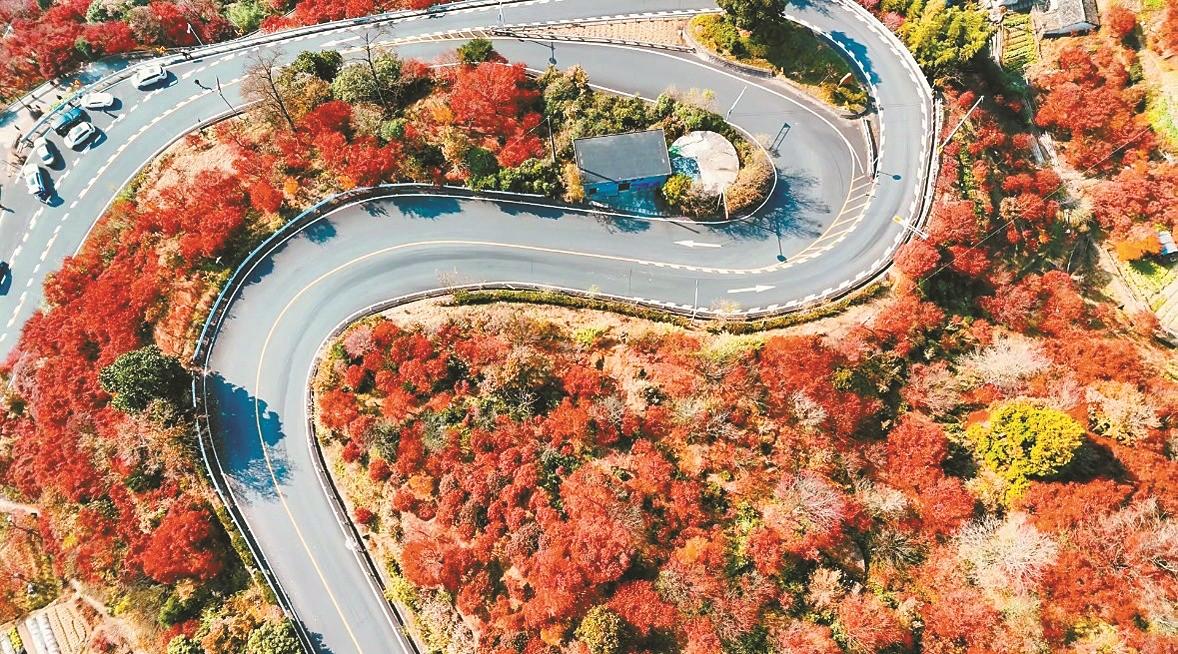
On the winding roads of the Siming Mountains, cars queue every weekend as visitors stop to photograph the towering metasequoia forests. In Mao'ao Village, Hengjie Town, tourists unwind in local cafes while golden ginkgo leaves drift past the windows. Meanwhile, in Maoxin Village, Guling Town, the sunset casts a warm glow over fields dotted with green train carriages, adding a picturesque touch to the countryside.
As autumn transitions into winter, an increasing number of travelers are choosing to experience village life firsthand. Rural communities across Ningbo are seeing growing crowds. What is driving the surge in Ningbo's rural tourism?
Picturesque Seasonal Scenery Draws Visitors In
In early winter, Dongshan Village, situated on the slopes of Xuedou Mountain, has become a magnet for visitors. Tourists and photography enthusiasts follow the Huanxi Ancient Trail to a viewing platform, where they sip coffee at the Yilan Café while taking in views of the Maitreya Altar's golden dome and the traditional houses of Xikou Town below.
"Since the start of autumn, the village has been receiving more than 1,000 visitors on average every weekend," said Hu Liangyu, development manager of Dongshan Village.
Local authorities in different parts of Ningbo have stepped up efforts to turn seasonal scenery into tourism momentum. "This year, we focused on curated activities that highlight both the natural landscapes and cultural assets of the Siming Mountains," said a representative from the Yuyao Siming Mountain Tourism Resort Management Center.
The resort has released an Autumn Scenery Guide and a Mountain Delicacies Guide, featuring scenic routes, intangible cultural heritage experiences, mountain cafés, and rural homestays.
According to official data, the Siming Mountains area received nearly 1.2 million visitors from late September to the end of November, up more than 21% year on year.
The surge reflects broader momentum in Ningbo's rural tourism. With appealing natural settings and distinctive local traditions, villages across the city are rolling out new experiences to attract urban visitors.
"Our Yunxia Pasture recently ranked first on Douyin's 'Ningbo Novel Experiences' list," said Ren Chaohui, development manager of Yunlong Village. Since October, the village has drawn more than 1,600 visitors by combining seasonal scenery with educational programs such as ginkgo harvesting and writing workshops.
The village's Muyun Cultural and Creative Park has also attracted dozens of young entrepreneurs, supporting ventures ranging from art galleries and cafés to small theaters. More than 30 cultural events have been held, with average visitor stays exceeding four hours and generating over one million yuan in collective income for villagers.
By turning natural landscapes into marketable tourism experiences, these initiatives are attracting steady visitor flows and creating new sources of wealth for local communities.
Diverse Experiences Keep Visitors Engaged
As more villages open new attractions, visitors are becoming more selective, often noting that the sites are "pretty, but not very engaging" or "worth a quick visit only".
Beyond repetitive offerings, basic infrastructure can also become a constraint. In some villages, parking capacity and restroom facilities are stretched once visitor numbers spike.
"We do need to upgrade physical infrastructure, but turning local resources into engaging experiences matters even more," said Li Huamin, executive director of the Ningbo All-for-One Tourism Development Academy and a professor at NingboTech University. "The real challenge is how to bring regional culture to life—so visitors can step into the story, stay longer, and are willing to spend."
In autumn, Hehong Village in Ninghai County—known locally as the "Longevity Village"—comes alive with activity. Along the village paths, the smell of roast chicken draws visitors inside. At a wood-fired pizzeria, ovens stay busy from morning through the afternoon as chefs knead dough, add toppings, and slide pizzas into the kiln. Freshly baked slices disappear almost as soon as they come out, snapped up by waiting tourists.
In late October, Hehong Village launched the Art Valley Cultural Tourism Fair. Visitors sampled traditional noodles, watched local opera performances, and took part in interactive programs. Professional role-players guided guests through scripted storylines, offering an immersive way to experience the village's culture and daily life.
A similar approach is taking shape in Linjia Village in Fenghua District, which lies off the usual tourist routes. "Linjia is known for its peaches, but peach blossoms appear only in spring and the harvest ends in summer, which makes tourism highly seasonal," said Ge Shanlu, who oversees tourism operations in the village. "A script-based real life roleplaying game designed by university students weaves together village history, peach farming tradition, and puzzle-solving. It breaks the seasonal barrier—visitors can step into the story at any time of the year and learn about Linjia while playing the role of the protagonist."
"Every village has its own history and cultural identity," Prof. Li said. "Only by playing to their unique strengths and turning isolated attractions into integrated visitor experiences can villages draw consistent crowds and build staying power."